
AI SEO Agent vs Traditional SEO Tools: The Real Difference
AI SEO agent vs traditional SEO tools: compare autonomous 24/7 SEO, GEO, and LLM citations. See why agents win. Start your trial today.
Summary
AI SEO agent vs traditional SEO tools: compare autonomous 24/7 SEO, GEO, and LLM citations. See why agents win. Start your trial today
AI SEO Agent vs Traditional SEO Tools is a critical consideration for teams looking to improve their results. This guide covers everything you need to know. An AI SEO agent is an autonomous system that researches, writes, audits, publishes, and learns continuously — while traditional SEO tools are passive dashboards that require a human to interpret data and execute every task. That is the entire difference. One compounds your organic traffic 24/7. The other gives you a chart and a to-do list. If you are still paying for keyword dashboards and content briefs in 2025, you are not doing SEO. You are doing data entry with extra steps.
Let's be blunt. The SEO industry sold you tools for a decade. Keyword planners. Rank trackers. Content optimizers. They all share one flaw: they stop at the insight. You still need to hire a writer, brief them, edit the draft, optimize the meta, publish it, build links, and monitor performance. That is a full-time job — or an agency retainer burning $5k to $15k a month. An AI SEO agent collapses that entire chain into a single autonomous loop. Here is exactly how it works, why it matters for rankings and LLM citations, and what to look for when you evaluate the category.

AI SEO Agent vs Traditional SEO Tools
Traditional SEO tools are databases with a UI. Ahrefs, Semrush, Moz — they crawl the web, store backlink and keyword data, and let you query it. Useful? Yes. Autonomous? No. They tell you that "best CRM for startups" has 2,400 monthly searches and a keyword difficulty of 42. They do not write the article. They do not publish it. They do not track whether it ranked, adjust the strategy, and write the next one better.
An AI SEO agent is different in kind, not degree. It runs a closed loop: research competitors, discover content gaps, write in your brand voice, audit against quality gates, publish to your CMS, then measure ranking outcomes via Google Search Console and feed that data back into the next cycle. That is what Mayla - AI SEO Employee does. It is not a tool you log into. It is an employee that works while you sleep.
The Passive vs. Autonomous Divide
| Capability | Traditional SEO Tools | AI SEO Agent (Autonomous) |
|---|---|---|
| Keyword research | Manual queries, static database | Continuous competitor gap scanning |
| Content creation | None — you hire writers | Multi-agent pipeline: Research → Write → Audit → Publish |
| Brand voice | Not applicable | Learns from top-performing content, enforces brand DNA |
| Publishing | None | Direct CMS integration (WordPress, Shopify, Webflow, Ghost) |
| Learning loop | Manual reporting | Continuous — adjusts strategy from GSC ranking data |
| GEO / LLM visibility | Rare, bolted on | Core function — optimizes for ChatGPT, Claude, Gemini, AI Overviews |
| Human hours per article | 4–8 hours | 0 (review optional) |
According to industry surveys, the average B2B SaaS company spends 6–10 hours per published article when using traditional tools and manual workflows. An autonomous agent reduces that to under 15 minutes of human review — or zero if you trust the quality gates.
GEO and LLM Citation Visibility: The Battlefield Traditional SEO Tools Ignore
Generative Engine Optimization (GEO) is the practice of getting your brand cited by large language models — ChatGPT, Claude, Gemini, Perplexity, and Google's AI Overviews. It is the fastest-growing traffic channel in search, and most traditional SEO tools have no answer for it. They were built for a world of ten blue links. That world is dying.
Here is the data point that should keep you up at night: AI Overviews now appear on a significant share of Google queries, and when they do, click-through rates on traditional organic results drop by as much as 30–40% for informational queries. If your content is not structured for AI extraction, you are invisible to the fastest-growing slice of search demand.
An AI SEO agent built for GEO does three things traditional tools cannot:
- Structures content for extraction — clear H2/H3 hierarchy, definitive statements, data tables, and FAQ blocks that LLMs parse and quote.
- Builds entity authority — consistent brand mentions, EEAT signals, and topical depth that LLMs use to decide who to cite.
- Monitors AI visibility — tracks how your site performs in AI-powered answers, not just SERP positions.
If you want the full technical breakdown, read our deep dive on ai search engine optimization. The short version: GEO is not a feature. It is a discipline, and it requires an agent that writes for both humans and machines simultaneously.
"Ranking on page one is table stakes. Getting cited inside the AI answer is the new page one."
— Mayla Labs
How the Multi-Agent AI Content Pipeline Outperforms Manual Workflows
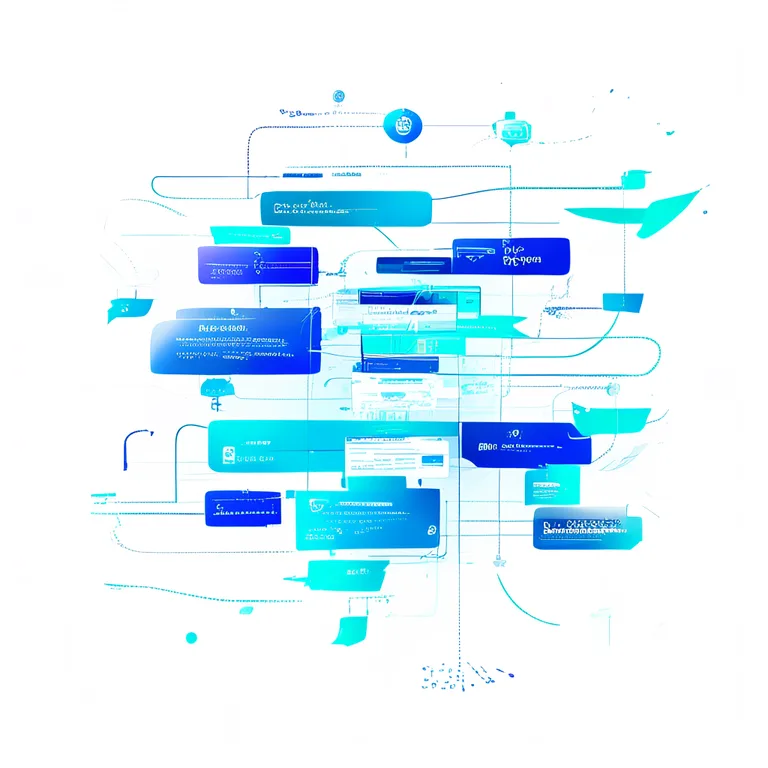
The technical stack is where the gap becomes a chasm. A traditional workflow is linear and human-dependent. An AI SEO agent runs a multi-agent pipeline where specialized LLM agents handle distinct stages, each with its own quality gate.
The Five Stages: Research → Write → Audit → Publish → Learn
- Research — The agent scans your top 10 competitors, identifies keywords they rank for that you don't, and surfaces content gaps. This is not a static keyword list. It is live competitive intelligence.
- Write — A writing agent produces a draft in your learned brand voice, structured for both Google and LLM extraction.
- Audit — A separate audit agent scores the draft against quality gates: factual accuracy, keyword placement, heading hierarchy, EEAT signals, and GEO formatting. Failing drafts get rewritten, not published.
- Publish — Approved content goes straight to your CMS and social channels via API integration.
- Learn — Ranking data from Google Search Console feeds back into the system. Keywords that underperform get deprioritized. Voice fidelity improves with every article.
This is why Python and modern LLM infrastructure matter. Building this in Python is not optional — it is the only sane choice for orchestrating API calls, embedding-based similarity search, vector databases, and asynchronous agent coordination. You are either building it in Python or you are not building it at all. If you want to see how that stack looks in practice, our python for AI SEO breakdown covers the architecture.
The audit stage is what separates a real agent from a ChatGPT wrapper. If a tool publishes whatever the LLM generates without a separate quality-gate pass, it is generating landfill. Demand multi-agent architecture with independent auditing.
Brand Voice Learning and Brand DNA Fidelity: Why Generic AI Content Fails
Here is the blunt truth: generic AI content does not rank. Google's helpful content system and its spam policies have specifically targeted mass-produced, low-fidelity AI text. The tell is always the same — no point of view, no specific vocabulary, no brand personality. It reads like it was written by a committee of interns who have never met your customer.
Brand DNA learning solves this. The agent analyzes your existing top-performing content — the pages that already rank and convert — and builds a voice profile: tone, sentence structure, vocabulary, audience targeting, and rhetorical patterns. That profile becomes a constraint on every new article. The output does not sound like AI. It sounds like you on your best day.
We wrote an entire piece on this failure mode and how to avoid it: the brutal truth about AI content. The takeaway is simple. Voice fidelity is not a nice-to-have. It is the difference between content that compounds and content that gets deindexed.
| Content Type | Brand Voice Fidelity | Typical Ranking Outcome | Human Edit Time |
|---|---|---|---|
| Generic AI output (no brand DNA) | Low — indistinguishable from competitors | Rarely ranks; often flagged as spam | High — full rewrite needed |
| Human-written (no system) | High — but inconsistent | Ranks if optimized; slow to scale | 4–8 hours per article |
| AI agent with brand DNA learning | High — consistent and enforced | Ranks and earns LLM citations | Under 15 minutes review |
Competitor Intelligence and Content Gap Discovery at Machine Speed
Manual competitor analysis is a snapshot. It is outdated the moment you finish the spreadsheet. An AI SEO agent runs continuous monitoring — tracking your top 10 competitors' keyword rankings, content velocity, and EEAT signals in real time. When a competitor publishes a new cluster, you know within hours, not quarters.
Content gap discovery is the highest-ROI output of this capability. The agent identifies keywords your competitors rank for that you have no content targeting. That is a prioritized roadmap handed to you on a plate — except the agent does not just hand you the roadmap. It executes it.
This is the core of what we call SEO Autopilot — the continuous cycle of scanning, analyzing, creating, publishing, and learning that runs 24/7 without a human in the tactical loop. You get a daily intelligence briefing. The agent gets to work.
If your current SEO tool requires you to export a CSV, open a spreadsheet, and manually assign keywords to writers, you are the bottleneck. Automation without autonomy is just a faster treadmill.
The Unity Connection: Systems Thinking Across Domains
Here is something most SEO companies will never tell you: the same systems-thinking discipline that builds a reliable AI SEO agent also builds reliable game systems. At Mayla Labs, we ship both. The architecture philosophy is identical — event-driven, data-oriented, and built to run without babysitting.
Our Unity Inventory System Asset uses a ScriptableObject core with constraint-based slot logic and event-driven UI updates. It does not poll. It reacts. Our Spawner Advanced & Pooling system eliminates garbage collection spikes with pre-warming and dynamic scaling — the same way a well-built SEO agent eliminates manual work spikes with pre-scheduled content pipelines. On the project side, Redemptions Guild — a VR action RPG — required a networked object pooler, a multi-faceted leveling system, and diegetic UI feedback for achievements. We built the systems to handle it. That is the same engineering rigor we apply to SEO automation.
If you are a Unity developer reading this, the lesson transfers directly: stop building throwaway systems. Build autonomous ones. The Advanced Leveling System and RNet Networking Library exist because we got tired of rewriting the same boilerplate for every project. Same reason we built an AI SEO agent instead of hiring another agency.
How Do I Choose Between an AI SEO Agent and Traditional SEO Tools?
Ask one question: do you want insights or outcomes? If you want insights and you have a team ready to execute, traditional tools are fine. If you want outcomes and you do not want to hire an SEO team, you need an agent.
Here is the decision framework:
- Choose traditional tools if — you have in-house writers, a content strategist, and 20+ hours a week to dedicate to execution.
- Choose an AI SEO agent if — you are a founder, CTO, or head of growth who needs compounding organic traffic without adding headcount.
- Choose both if — you want the agent to handle 90% of execution and use traditional tools for ad-hoc research.
The economics are not close. A traditional stack plus a freelance writer costs $2,000–$8,000 per month for 8–12 articles. An AI SEO agent runs a fraction of that with 10x the output velocity. The best AI SEO tool for autonomous growth comparison breaks down the actual numbers.
And if you want to stop guessing and start ranking, read our piece on content optimization — it covers exactly how to structure content so both Google and LLMs reward it.
Frequently Asked Questions
Q: What is the difference between an AI SEO agent and a traditional SEO tool?
A: A traditional SEO tool is a passive database — it shows you keyword data and rankings but requires a human to execute every task. An AI SEO agent is autonomous: it researches competitors, writes content in your brand voice, audits it against quality gates, publishes to your CMS, and learns from ranking data continuously. The agent produces outcomes; the tool produces insights.
Q: How do I get my content cited by ChatGPT and Google AI Overviews?
A: Structure content for extraction. Use clear H2/H3 hierarchy, definitive statements, data tables, FAQ blocks, and factual statistics. Build entity authority through consistent brand mentions and EEAT signals. An AI SEO agent with GEO optimization does this automatically on every article — it is not a manual checklist.
Q: Can an AI SEO agent really match my brand voice?
A: Yes, if it uses brand DNA learning. The agent analyzes your existing top-performing content to build a voice profile — tone, vocabulary, sentence structure, audience targeting — then enforces that profile on every new article. The output sounds like you, not like generic AI. Tools without brand DNA learning produce content that reads like everyone else's.
Q: What is the best AI SEO tool for autonomous growth in 2025?
A: The best tool is one that runs a full closed loop: competitor intelligence, content gap discovery, multi-agent writing with quality gates, CMS publishing, and continuous learning from Google Search Console data. Mayla is built exactly for this — it is an AI SEO employee, not a dashboard. Start with the 7-day trial for $1.99 to see the output quality before committing.
Q: Why does the technical stack matter for AI SEO?
A: Because orchestrating multi-agent pipelines, embedding-based similarity search, vector databases, and asynchronous API calls requires real engineering. Python is the only sane choice for this stack. Tools built on no-code wrappers cannot handle the complexity of a true research-write-audit-publish-learn loop, and it shows in the output quality.
Q: How long until I see results from an AI SEO agent?
A: Expect early ranking movements in 4–8 weeks and compounding traffic in 3–6 months. The advantage over manual workflows is velocity — the agent can publish 30–150 articles per month depending on your plan, versus 8–12 for a human team. More quality-gated content published faster means faster compounding.
The choice is not between two tools. It is between two operating models. One requires you to be the engine — interpreting data, briefing writers, editing drafts, publishing, and monitoring. The other runs itself. Traditional SEO tools were built for an era when humans had to do the work. That era is over. An AI SEO agent researches, writes, audits, publishes, and learns 24/7, compounding your organic traffic and LLM citation visibility while you focus on the business. If you are ready to stop babysitting dashboards and start shipping outcomes, start your 7-day trial and watch the first articles publish themselves.
More from Mayla Labs

AI SEO vs Traditional SEO Agency: What's the Real
AI SEO vs traditional SEO agency: discover why AI costs 70-90% less, works 28x faster, and matches quality. Start your 30-day pilot today.

AI SEO Employee vs Agency: Autonomous AI SEO Wins
AI SEO employee vs agency: compare cost, speed, and GEO citation power. See why autonomous AI SEO wins and start your $1.99 trial today.

AI SEO Software That Learns and Adapts Automatically
AI SEO software that learns and adapts automatically: multi-agent pipelines, GEO citations, and GSC-driven optimization. Start ranking 24/7.

AI SEO Software for Service-Based Businesses That Ranks
Discover how AI SEO software for service-based businesses ranks you on autopilot. Compare tools, costs & results. Start your $1.99 trial today.
📋 Embed this feed on your website:
<script src="https://maylalabs.com/api/embed?api_key=mayla_site_ffa932ca083d0056918fd3430ebb301bcfa6ad08dad32efc&limit=5" defer></script>