
Pest Control SEO: Autonomous AI That Ranks and Gets Cited
Pest control SEO that ranks and gets cited by AI. Learn how autonomous AI pipelines cut cost per ranking page. See Mayla's system now.
Summary
Pest control SEO that ranks and gets cited by AI. Learn how autonomous AI pipelines cut cost per ranking page. See Mayla's system now.
Pest Control SEO: Autonomous AI That Ranks and Gets Cited
Pest control SEO is the practice of earning organic visibility for extermination, termite, rodent, and wildlife-removal queries across Google and AI search engines. The fastest way to win it in 2025 is an autonomous AI SEO system that runs competitor intelligence, content gap analysis, brand-voice writing, and GEO optimization on a continuous loop. Mayla's Autonomous SEO Platform does exactly that for pest control companies—researching the top 10 competitors, identifying the untapped keywords they rank for, and publishing quality-gated articles in your brand voice. The result: more booked jobs at a lower cost per ranking page, with citations in ChatGPT, Google AI Overviews, and Perplexity.

Here's the uncomfortable truth: pest control is one of the most competitive local service niches in search. You're bidding against national franchises with seven-figure marketing budgets, franchise networks with hundreds of location pages, and DIY blogs that answer "how do I get rid of ants" for free. Manual content optimization can't keep up. That's not strategy. That's noise.
Why Pest Control SEO Is a Brutal, High-Stakes Game
Pest control queries are money queries. When someone types "termite inspection near me" at 11 PM after finding frass in their garage, they are not browsing. They are buying. And the company that shows up first—in the map pack, in the AI Overview, in the Perplexity answer—gets the call.
The problem is that pest control SEO is uniquely hard for three reasons:
- Seasonality swings hard. Termite searches spike in spring, rodent searches spike in fall, mosquito searches spike in summer. Your content calendar has to anticipate demand, not react to it.
- Local intent dominates. "Pest control near me" and "exterminator [city]" require geo-modified content at scale—dozens or hundreds of location pages, each one unique, each one EEAT-signaled.
- Trust is the conversion gate. Nobody lets a stranger into their home to spray chemicals without evidence of licensing, safety, and reviews. Your content has to prove authority before it sells.
Meanwhile, the search landscape itself is fracturing. Google AI Overviews now answer a meaningful share of informational pest queries directly on the results page. ChatGPT and Perplexity are becoming default research tools for homeowners. If your content isn't structured to be cited by these engines, you're invisible to a growing slice of your market.
Ranking #1 in Google is no longer enough. If an AI Overview answers the query above your blue link, your click-through rate collapses. Pest control SEO now requires GEO—Generative Engine Optimization—or you're optimizing for a shrinking surface.
How Do You Build a Pest Control SEO Strategy That Actually Ranks?
Stop guessing—start ranking. A modern pest control SEO strategy has five moving parts, and they have to run continuously, not as a one-time project.
1. Competitor Intelligence and Content Gap Analysis
You cannot outrank what you don't understand. Start by mapping the top 10 competitors in your metro—the franchises, the regional players, the aggressive independents—and reverse-engineering their keyword footprint. Which service pages rank? Which blog posts pull traffic? Which location pages are thin and vulnerable?
This is where Competitor Intelligence earns its keep. It monitors your top 10 competitors automatically, tracking keyword rankings, content strategies, and EEAT signals so you can see exactly where they're weak. Maybe the biggest franchise in your city has a great termite page but a pathetic bed bug page. Maybe nobody in your market has written a serious piece on "how much does rodent exclusion cost." That's your opening.

2. Entity Coverage and EEAT Signals
Google doesn't rank keywords. It ranks entities and the relationships between them. For pest control, the entities that matter include: pest species (subterranean termites, German cockroaches, Norway rats), treatment methods (fumigation, baiting, exclusion, IPM), regulatory bodies (state pesticide boards, EPA), and local geography.
EEAT—Experience, Expertise, Authoritativeness, Trustworthiness—is the ranking multiplier. For a pest control company, that means author bios with licensing numbers, citations to CDC and university extension sources, before-and-after photos, and clear service-area pages. Content that skips these signals gets filtered, no matter how well it's written.
3. Brand Voice Learning and Content Personalization
Generic AI content is the fastest way to get your site deindexed in spirit if not in fact. Homeowners can smell it. So can Google's helpful content systems.
The fix is brand voice learning. Before a single article is written, the system ingests your existing site, your service pages, your review responses, your sales scripts—and builds a Brand DNA profile. Tone, vocabulary, sentence rhythm, the way you talk about safety, the way you handle price objections. Every generated article has to pass a fidelity gate against that profile before it publishes.
"Content that sounds like you ranks longer than content that sounds like a template."
— Mayla content engineering principle
This is the difference between a multi-agent pipeline that produces publishable work and a one-shot prompt that produces slop. If you want the brutal truth about AI content, read this breakdown of why most AI writing fails—and why quality gates are non-negotiable.
GEO and LLM Visibility: How Do You Get Cited by ChatGPT and AI Overviews?
Generative Engine Optimization is the discipline of making your content the answer that AI engines pull into their responses. It's not the same as traditional SEO, though the two overlap.
AI engines cite content that is:
- Directly answerable. The first 100 words of a page should be a complete, quotable response to the primary query. No throat-clearing.
- Structured for extraction. Clear H2/H3 hierarchy, tables, definition blocks, numbered steps.
- Factually dense. Specific numbers, dates, costs, and named sources. AI engines cite numbers.
- Authoritative in tone. Definitive statements, not hedged opinions.
For a pest control company, that means your "how much does termite treatment cost" page should open with an actual price range, broken down by treatment type and home square footage—not a paragraph about how "costs vary."
Run a GEO / LLM Optimization Analysis on your site today. Ask ChatGPT and Perplexity the ten queries your best customers type. If your company isn't cited in the answers, you have a GEO gap—and it's costing you jobs.
What GEO Looks Like in Practice for Pest Control
| Query Type | Traditional SEO Target | GEO Target | Content Format That Wins |
|---|---|---|---|
| Cost queries ("termite treatment cost") | Service page + blog post | Cited in AI Overview with price range | Table of costs by treatment type and home size |
| Identification queries ("what do termites look like") | Blog post with images | Pulled into ChatGPT answer | Comparison table + labeled photos + size specs |
| Local queries ("exterminator near me") | Google Business Profile + location pages | Mentioned in Perplexity local roundups | Unique city pages with local pest data and reviews |
| Urgency queries ("how to get rid of roaches fast") | How-to guide | Featured snippet + AI Overview step list | Numbered steps with time estimates |
The overlap is real, but the optimization target is different. Traditional SEO optimizes for a click. GEO optimizes for a citation—and citations drive branded searches, which drive direct calls.
The Multi-Agent AI Content Pipeline: Research → Write → Audit → Final
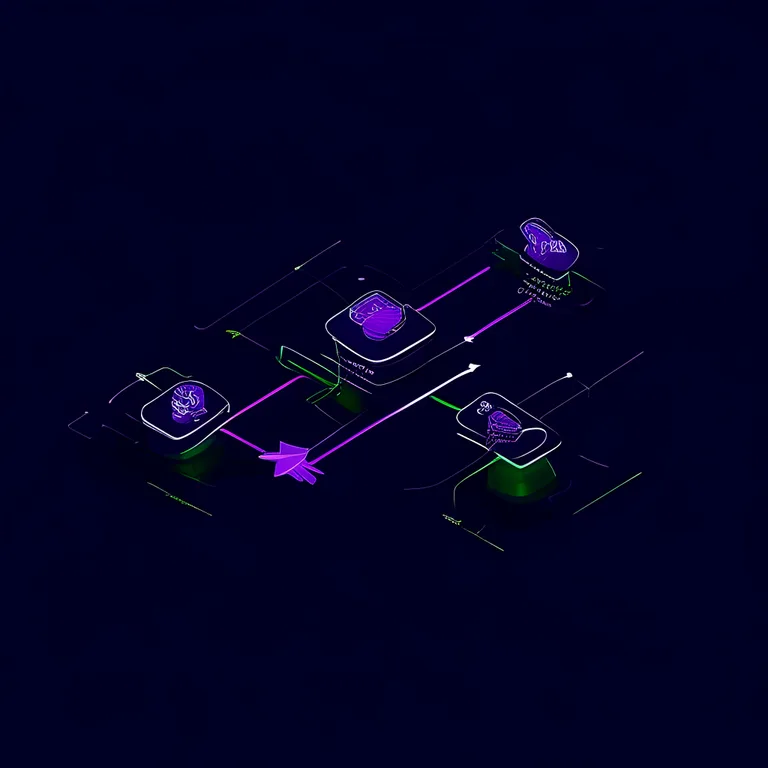
Single-prompt AI writing produces single-prompt AI quality. That's why serious operators use a multi-agent pipeline—a chain of specialized agents, each with a job, each with a quality gate.
Here's how the pipeline works inside AI Content Creation:
- Research agent. Pulls SERP data, competitor pages, People Also Ask questions, and entity gaps for the target keyword.
- Writer agent. Drafts the article against the Brand DNA profile, hitting the semantic coverage targets the research agent identified.
- Audit agent. Scores the draft against EEAT signals, keyword coverage, readability, factual density, and brand voice fidelity. Fails anything below threshold.
- Final agent. Formats for CMS, generates metadata, adds schema, and stages the article for publication.
Each gate is a filter. The result is that what publishes is the top decile of what was drafted—not the average.
Why Quality Gates Matter More Than Volume
Google's helpful content system doesn't penalize AI content. It penalizes unhelpful content. The distinction is whether the page delivers original value: real data, real experience, real specificity.
A pest control article that says "termites can cause significant damage" is worthless. One that says "subterranean termites cause an estimated $5 billion in U.S. property damage annually, and a mature colony can consume 2 linear feet of 2x4 lumber per year" is citable—by Google, by ChatGPT, by a homeowner deciding whether to call you.
Continuous Performance Optimization and the ROI Math
Publishing is not the finish line. It's the start of the feedback loop.
Continuous Performance Optimization tracks ranking outcomes against real Google position data—via Google Search Console Integration—and adjusts keyword strategy based on what's actually moving. If a termite cost article climbs to position 4 but stalls, the system identifies the gap (likely internal links or schema) and patches it. If a bed bug article flatlines after 60 days, it gets rewritten or retired.
This is the part manual SEO teams never do consistently. They publish, they move on, they never close the loop. The result is a content library that decays instead of compounding.
The Cost-Per-Ranking-Page Math
| Approach | Cost Per Article | Articles/Month | Avg. Time to Rank | Cost Per Ranking Page (12 mo) |
|---|---|---|---|---|
| Freelance writer + manual SEO | $250–$600 | 4–8 | 4–8 months | $400–$900 |
| Agency retainer | $500–$1,200 | 8–12 | 3–6 months | $600–$1,400 |
| Single-prompt AI + editor | $40–$120 | 20–40 | Rarely ranks | N/A (fails gates) |
| Autonomous AI pipeline (Mayla) | $15–$60 effective | 30–80+ | 2–5 months | $80–$250 |
The math is not subtle. When you cut cost per ranking page by 60–80% and simultaneously increase publishing velocity by 5–10x, the compounding effect on organic traffic is dramatic. For a pest control company in a competitive metro, that's the difference between fighting for page two and owning the map pack.
"The companies winning pest control SEO in 2025 aren't writing better articles. They're running better systems."
— Mayla
Authority Building: Turning Articles Into Multi-Platform Assets
One well-researched article is not one asset. It's five or six, if you're running the right system.
Authority Building takes each published article and amplifies it: AI-generated featured images, short-form videos for TikTok, Reels, and YouTube Shorts, and automated social distribution across LinkedIn, X, Facebook, and Pinterest. The article becomes a video. The video becomes a social post. The social post drives branded searches. The branded searches reinforce your authority signals to Google.
For pest control specifically, short-form video is a cheat code. A 30-second clip of a technician explaining how to spot termite frass outperforms almost any text post on engagement. And Short Form Video Generator turns your blog posts into those clips automatically—platform-native, SEO-optimized, and on-brand.
Multi-platform distribution isn't a nice-to-have. Branded search volume is a confirmed ranking signal. The more places your brand appears, the stronger your entity footprint—and the easier it is for AI engines to cite you as an authority.
Putting It Together: What an Autonomous Pest Control SEO Operation Looks Like
Here's the full loop, running daily without a human in the middle:
- Overnight: Competitor intelligence scans your top 10 rivals. Content gaps are logged. New keyword opportunities are scored.
- Morning: A daily intelligence briefing lands in your inbox—what moved, what's vulnerable, what to publish next.
- Midday: The multi-agent pipeline drafts, audits, and finalizes 1–3 articles in your brand voice.
- Afternoon: Articles publish to your CMS. Featured images generate. Short-form videos render. Social posts schedule.
- Weekly: Performance data flows back from Google Search Console. Underperformers get flagged. Winners get internal links and refreshes.
- Monthly: Brand voice fidelity improves. Keyword strategy shifts based on real ranking outcomes. The system gets smarter.
That's what an AI SEO Employee actually does. Not a tool you have to operate—an employee that operates itself.
If you want to see how this compares to the broader AI SEO market, review the best AI SEO tools for autonomous growth and judge for yourself.
Frequently Asked Questions
Q: How do I rank my pest control company on Google in 2025?
A: Focus on three things: unique location and service pages with EEAT signals (licensing, reviews, before-and-after photos), a continuous content pipeline that targets informational queries your customers actually type, and GEO optimization so your pages get cited in AI Overviews and ChatGPT. Manual publishing can't keep pace with franchise competitors—an autonomous pipeline can.
Q: What's the best way to get cited by ChatGPT and Google AI Overviews for pest control queries?
A: Open every page with a complete, quotable answer in the first 100 words. Use tables, numbered steps, and specific numbers (costs, timelines, damage figures). Cite authoritative sources like the CDC, EPA, and university extension programs. Content structured this way gets pulled into AI answers far more often than narrative prose.
Q: How much does pest control SEO cost per month?
A: Traditional agency retainers run $2,000–$8,000 per month for 8–12 articles. Autonomous AI SEO platforms typically deliver 30–80+ articles per month at a lower total cost, which drops cost per ranking page from $400–$1,400 to $80–$250 within the first year.
Q: Can AI-written content actually rank for competitive pest control keywords?
A: Yes—if it passes quality gates. Google penalizes unhelpful content, not AI content. Multi-agent pipelines that research, write, audit, and finalize against EEAT and brand voice standards produce articles that rank. Single-prompt AI output does not.
Q: Why should pest control companies care about GEO and LLM visibility?
A: Because a growing share of homeowners now research pests and treatments through ChatGPT, Perplexity, and Google AI Overviews. If your company isn't cited in those answers, you're invisible to that traffic—even if you rank #1 in traditional search results below the AI Overview.
Q: How long does it take to see results from pest control SEO?
A: New pages typically take 2–5 months to rank meaningfully, depending on domain authority and competition. Local map pack improvements can appear within 4–8 weeks with consistent Google Business Profile activity and review velocity. Compounding traffic gains usually show at the 6–12 month mark.
Pest control SEO in 2025 is a systems problem, not a content problem. The companies winning are running autonomous pipelines that research competitors, identify gaps, write in brand voice, optimize for AI citation, and learn from real ranking data—every single day. Manual efforts can't compete with that velocity. If you're ready to stop guessing and start ranking, see how Mayla's autonomous AI SEO employee works or explore AI search engine optimization for the GEO era. Your competitors are already publishing. The only question is whether you'll outrank them or watch them outrank you.
More from Mayla Labs

AI SEO Automation That Doesn't Produce Landfill Content
AI SEO automation that doesn't produce landfill content — AI SEO automation that ranks, not landfill. Multi-agent pipelines, GEO Learn more today.

AI SEO Automation Platform for Startups: Rank and Get Cited
AI SEO automation platform for startups: autonomous agents, GEO visibility, quality gates. See how Mayla ranks pages. Start today.

AI SEO Agent vs Traditional SEO Agency: Which Wins?
AI SEO agent vs traditional SEO agency: cost, speed, GEO compared. See why autonomous pipelines win at $15/mo. Start your free trial today.

AI Content Strategy Tool: A Complete Guide for 2026
Discover how an AI content strategy tool automates research, writing & publishing. Compare features, see ROI data, and choose the best. Learn more today.
📋 Embed this feed on your website:
<script src="https://maylalabs.com/api/embed?api_key=mayla_site_ffa932ca083d0056918fd3430ebb301bcfa6ad08dad32efc&limit=5" defer></script>