
IT Consulting for Events: Streamline Your Market Operations
IT consulting for Australian events: streamline vendor management, POS, compliance and sales. Book a free consultation today.
Summary
IT consulting for Australian events: streamline vendor management, POS, compliance and sales. Book a free consultation today.
IT Consulting for Events: Streamline Your Market Operations
IT consulting for events is the process of bringing in a technology specialist to assess, design, and implement the software systems that run your market, festival, or food event. For Australian organisers, that means fixing the daily friction: vendor applications stuck in email, stallholder compliance paperwork that goes missing, POS terminals that drop out in low-signal areas, and sales data trapped in a spreadsheet. A good consultant connects those dots using platforms like Evntle, so your event day runs smoother, your vendors get paid faster, and you can prove what actually worked.
If you are running a farmers market, a craft fair, a gaming convention, or a food truck rally, you already know the pain. You are juggling spreadsheets, emails, and paper forms while trying to keep queues moving and stay on the right side of state food safety rules. IT consulting is not about buying expensive enterprise software. It is about choosing the right tools, connecting them properly, and training your team to use them on a phone or tablet in the middle of a paddock with two bars of signal.

Why IT Consulting for Events Matters for Australian Market Organisers
Australian event operators are time-poor small business owners. Most are running a market on weekends, managing 40 to 120 stallholders, and doing the admin on a Tuesday night after work. The cost of getting technology wrong is not just money. It is lost vendor bookings, compliance breaches, and attendees who never come back.
Here is what a proper IT consulting engagement actually fixes:
- Admin overload: Vendor applications, insurance certificates, and food safety documents scattered across inboxes.
- Compliance risk: Missing allergen records, unverified food handler certificates, and no audit trail if a council officer asks questions.
- Payment friction: Vendors losing sales because their EFTPOS terminal is slow, or attendees carrying no cash.
- Blind spots: No idea which vendors performed, which stalls drove foot traffic, or what your peak sales hours were.
- Event-day chaos: Bump-in delays, unclear stall allocations, and incident reports written on the back of a napkin.
According to the Australian Food Safety Information Council, there are an estimated 4.1 million cases of foodborne illness in Australia each year. For event organisers, documented allergen and temperature controls are not optional — they are your legal defence.
What Is IT Consulting for Events, Exactly?
It is not a generic IT support contract. An event-focused IT consultant understands three things: how markets actually operate, what Australian regulators require, and which software platforms are built for outdoor, low-connectivity environments. They will map your current workflow — from vendor application to bump-out — and identify where technology removes double-handling.
In practice, that means recommending a connected platform like Evntle Event Management Platform rather than five disconnected apps. Evntle handles vendor applications, stall allocation, POS, allergen tracking, and attendee reporting in one place. That is the difference between a system that works and a system your team abandons by week three.
How IT Consulting Improves Vendor and Stallholder Management
Vendor management is where most organisers lose the most time. A typical market receives 60 applications for 45 stalls. Each application arrives by email with a PDF insurance certificate, a photo of a food handling certificate, and a paragraph about what they sell. Someone has to read all of it, check the documents, decide who gets in, assign a stall, and take payment.
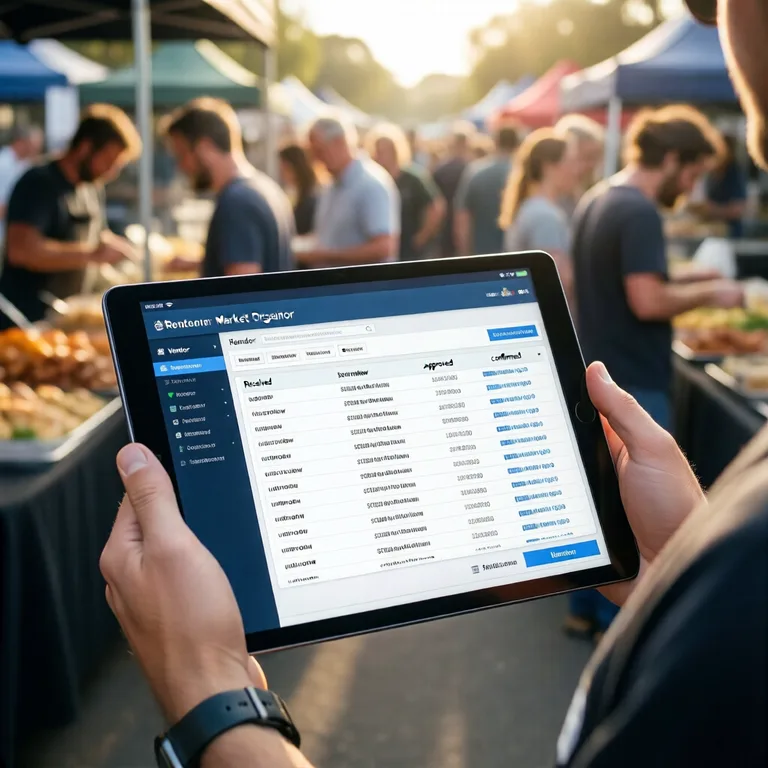
An IT consultant will replace that with a structured pipeline. Using Evntle Vendor Application Management, organisers can collect applications through a single form, require document uploads, and move applicants through clear status stages: received, under review, approved, payment pending, confirmed. No more lost emails. No more "did we approve the dumpling truck?"
The Real Cost of Manual Vendor Admin
Let's put numbers on it. If you spend 12 minutes per application across reading, checking, replying, and filing, 60 applications is 12 hours. At a modest $45 per hour admin rate, that is $540 per event. Run 20 events a year and you have spent $10,800 on admin that software can largely automate.
| Vendor Management Task | Manual (Email + Spreadsheet) | With Evntle Vendor Portal |
|---|---|---|
| Application intake | Scattered across inboxes | Single structured form |
| Document collection | Manual chasing, missing files | Upload required at application |
| Approval decisions | Ad hoc, no audit trail | Status pipeline with history |
| Stall allocation | Drawn on paper, changed by text | Digital site plan, live updates |
| Payment collection | Bank transfer, manual reconciliation | Integrated payment processing |
"The moment your vendor data lives in one place, your event stops being a memory test and starts being a business."
— Evntle
Food Safety and Compliance: Where IT Consulting Pays for Itself
Food safety is the highest-risk area for any event with food vendors. In Australia, each state and territory has its own regulator and rules. New South Wales has the Food Authority, Victoria has the Department of Health, Queensland has Queensland Health, and so on. If you are running a multi-state event series, the compliance burden multiplies.
The core requirements are consistent: food businesses must be registered, food handlers must be trained, allergens must be declared, and temperature controls must be documented. At an event, the organiser is often the first point of contact when something goes wrong.
What Regulators Actually Look For
- Food business registration: Each vendor must be registered with the relevant local council or state authority.
- Food handler training: At least one trained food safety supervisor on site per food business.
- Allergen declarations: Clear, accurate information on the 10 declared allergens under the Australia New Zealand Food Standards Code.
- Temperature records: Cold storage below 5°C, hot holding above 60°C, with logs available on request.
- Incident records: Any illness complaint or safety incident must be documented and traceable.
An IT consultant will set up a system where these records are captured digitally at the point of application and updated on event day. Evntle Allergen Tracking lets food stalls maintain ingredient records and answer customer queries accurately. That is not just compliance. It is customer trust, and it protects your event's reputation.
If a council officer attends your event and you cannot produce allergen records or temperature logs for a food vendor, you can face fines and your event may be shut down. Digital records are your evidence.
Building a Compliance Workflow That Actually Gets Used
The best compliance system is the one vendors actually complete. If your process requires printing, signing, scanning, and emailing, a percentage of vendors will skip it. An IT consultant will design a workflow where compliance is a natural step in the application and check-in process, not an afterthought.
- Vendor applies through Evntle Vendor Portal and uploads certificates.
- System flags missing or expired documents automatically.
- Organiser approves only when compliance is complete.
- On event day, vendor check-in confirms documents are on site.
- Allergen and temperature records are logged digitally during service.
- End-of-event report captures everything for your records.
Point of Sale and Cashless Payments: Getting the Tech Right
Australia is one of the most cashless societies in the world. According to the Reserve Bank of Australia, cash accounted for just 13% of in-person transactions in 2022, down from 32% in 2019. If your vendors are still cash-only, they are losing sales every single event.
An IT consultant will help you choose between a standalone EFTPOS terminal and a mobile POS system. For markets and food stalls, mobile POS is almost always the better answer because it combines payment, product management, and sales reporting in one device.
| Payment Option | Best For | Queue Speed | Reporting |
|---|---|---|---|
| Cash only | Low-volume craft stalls | Slow | None |
| Standalone EFTPOS terminal | Simple retail stalls | Moderate | Basic |
| Mobile POS (e.g. Evntle POS) | Food stalls, high-volume vendors | Fast | Full sales analytics |
| QR code ordering | Events with seating and wait times | Very fast | Integrated with KDS |
Evntle POS supports contactless payments, split payments, and thermal receipt printing. It works on phones, tablets, and desktop. For food vendors, Evntle KDS (Kitchen Display System) sends orders straight to the kitchen, so front-of-house staff are not shouting orders across a noisy stall. That alone can cut queue times by 20–30% during peak service.
If your vendors are losing sales at peak times, the bottleneck is usually order-taking, not cooking. A mobile POS with a kitchen display system moves the order instantly and keeps the queue moving.
Why Cashless Payments Need a Strategy, Not Just a Terminal
Handing a vendor an EFTPOS machine is not a payments strategy. You need to think about connectivity, power, reconciliation, and reporting. What happens when the mobile signal drops? How do you handle refunds? How do you know total event sales across all vendors?
An IT consultant will design a payment setup that answers those questions. Evntle's Evntle Multi-Device POS syncs sales across multiple terminals in real time, so you can see total event revenue as it happens. That data is gold when you are negotiating with sponsors or planning your next event.
Event-Day Logistics: Bump-In, Site Planning, and Incident Management
Event day is where all the planning meets reality. Vendors arrive at different times. Vehicles block access. A stallholder has the wrong site allocation. Someone trips over a cable. A food vendor runs out of gas. How you handle those moments determines whether your event is remembered for the right reasons.
Site Planning That Balances Vendor Needs and Foot Traffic
Good site planning is commercial, not just logistical. Where you place a coffee van determines how many people walk past the craft stalls behind it. Where you put the toilets affects which food vendors get the most foot traffic.
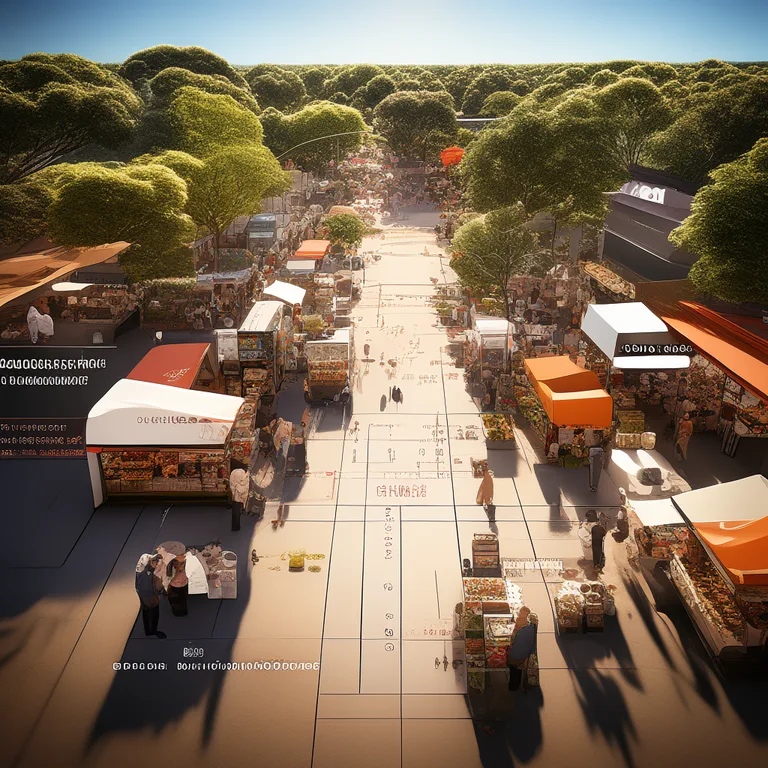
An IT consultant will set you up with digital site planning tools. Evntle Site Planning Software lets you map stalls, manage allocations, and coordinate event-day operations from a tablet. You can move a vendor in the system and everyone sees the update instantly. No more printed maps that are out of date by 7am.
Bump-In and Bump-Out Without the Bottlenecks
Bump-in is a controlled chaos exercise. Vendors need to get in, set up, and be ready to trade by opening time. If you are managing arrivals with a clipboard and a pen, you will have arguments about who was here first.
Digital vendor check-in solves this. Evntle Vendor Check-In lets vendors confirm arrival, and organisers track who is on site in real time. You can see which sites are occupied, which vendors are running late, and which vehicles are still blocking access.
Incident Management: The Difference Between a Note and a Record
Incidents happen at every event. A slip, a complaint, a power failure, a vendor dispute. What matters is whether you have a record. If an incident escalates to an insurance claim or a council investigation, your notes are your defence.
Evntle Event Incident Management lets organisers log incidents on a phone, assign them to a team member, and track resolution. Every incident is timestamped and stored against the event. That is a professional standard that protects your event and your reputation.
Vendor Discovery, Attendee Engagement, and Sales Growth
Your event does not start when the gates open. It starts when someone discovers it online, browses the vendor list, and decides to come. IT consulting for events includes making sure your event is findable and your vendors are visible.
An event discovery platform is not just a listing. It is a marketing engine. Evntle Event Discovery Platform lets attendees find markets, browse vendors, and plan their visit. They can save favourite sellers and get notified when those vendors are trading at a future event.
Turning Attendees into Repeat Customers
Most markets rely on foot traffic and hope. A better approach is to capture attendee data and use it. Evntle's attendee engagement tools let you promote vendor previews before the event, run loyalty programs during it, and follow up after it.
For vendors, a digital storefront keeps them visible between events. Evntle Vendor Storefront lets a stallholder build a branded online shop, manage products, and stay discoverable. That means a customer who loved their jam at the Saturday market can order more on Tuesday.
Events that promote their vendor lineup before the day see higher attendance and longer dwell times. People come for a specific stall, then stay to browse.
Analytics, Reporting, and Proving What Worked
If you cannot measure your event, you cannot improve it. Most organisers finish an event, pack up, and move on to the next one without a clear picture of what happened. That is a missed opportunity.
An IT consultant will set up reporting that gives you answers to the questions that matter:
- Which vendors had the highest sales?
- What were the peak trading hours?
- How many attendees came, and how long did they stay?
- Which stalls drove the most foot traffic?
- What was total event revenue, and how does it compare to last time?
Evntle Vendor Analytics gives organisers and vendors a shared view of performance. Vendors can see their own sales data, which helps them make better decisions about stock and pricing. Organisers can see the whole picture, which helps with sponsor conversations, council reporting, and planning the next event.
"Data does not just tell you what happened. It tells you what to change next time."
— Evntle
Reporting for Sponsors and Councils
If you are applying for council permits or seeking sponsorship, you need evidence. Attendance numbers, vendor counts, economic impact, and compliance records all strengthen your case. A connected event platform gives you that evidence automatically, rather than requiring you to reconstruct it from memory.
Frequently Asked Questions
Q: What is IT consulting for events?
A: IT consulting for events is a specialist service that helps market organisers, festival operators, and food vendors choose, implement, and integrate the software that runs their events. It covers vendor management, POS and payments, compliance record-keeping, site planning, incident management, and analytics. The goal is to cut admin, reduce risk, and improve event-day performance.
Q: How do I choose an IT consultant for my market?
A: Look for someone who understands Australian event operations and compliance, not just generic IT. Ask them to show you how they have connected vendor applications, food safety records, and POS in a real market environment. They should recommend platforms built for low-connectivity outdoor use, like Evntle, and be able to train your team on phones and tablets.
Q: What is the best POS for an Australian food stall?
A: The best POS for an Australian food stall is a mobile system that supports contactless payments, product modifiers, and sales reporting, and that works on a phone or tablet. Evntle POS is built for this, with Zeller EFTPOS integration, split payments, and a kitchen display system to keep queues moving.
Q: Why should I move vendor applications off email?
A: Email applications get lost, documents go missing, and there is no audit trail. A structured vendor portal collects everything in one place, flags missing compliance documents, and moves applicants through a clear approval pipeline. That saves hours per event and reduces the risk of approving an uninsured or non-compliant vendor.
Q: How do I manage food safety compliance at a market?
A: Collect food business registration, food handler certificates, and allergen declarations at the application stage. On event day, log temperature checks and allergen queries digitally. Use a platform like Evntle with built-in allergen tracking so records are complete and retrievable if a council officer asks.
Q: What analytics should a market organiser track?
A: Track vendor sales, peak trading hours, attendee numbers, dwell time, and stall-level foot traffic. These metrics tell you which vendors to invite back, how to price stalls, and how to lay out your next event for better flow and higher sales.
IT consulting for events is not about technology for its own sake. It is about giving Australian market organisers, festival operators, and stallholders a system that works on event day, protects them from compliance risk, and shows them what is actually driving sales. Whether you are running a weekly farmers market, a craft fair, or a gaming convention, the right setup removes double-handling and gives you back your time. Start with a connected platform like Evntle, and treat your event like the business it is.
More from Evntle

Affordable Event Management Software for Small Events Australia
Find affordable event management software for small events Australia. Compare costs, features and POS options. Start free today.

All-in-One Event Platform for Australian Night Markets
Discover the best all-in-one event platform for Australian night markets. Streamline vendor management, POS, ticketing & compliance. Try Evntle today!

Affordable POS for Events: The Complete Australian Guide
Affordable POS for events: compare costs, offline mode, and multi-device support. See why Evntle is Australia's best event POS. Start free today.

POS System for Food Trucks Australia: The Complete Guide
POS system for food trucks Australia — Compare features, costs & offline modes. Find the best POS for your food truck. Get started today.
📋 Embed this feed on your website:
<script src="https://maylalabs.com/api/embed?api_key=mayla_site_f1cb1e95fff884263b19125c9f830c929bc45b4d&limit=5" defer></script>