
B2B Event Management: A Complete Guide for Organisers
Master B2B event management with our complete guide. Learn vendor coordination, live ops, and ROI tracking. Start planning smarter today!
Summary
Master B2B event management with our complete guide. Learn vendor coordination, live ops, and ROI tracking. Start planning smarter today
B2B event management is the strategic planning, coordination, and execution of business-to-business events such as conferences, trade shows, networking summits, and industry expos. It involves managing vendors, attendees, logistics, and live operations to create measurable business outcomes like lead generation, partnership building, and revenue growth. Unlike consumer events, B2B gatherings require a sharper focus on ROI, stakeholder alignment, and professional relationship management. Whether you're running a 200-person industry forum or a multi-day trade exhibition, the core challenge remains the same: keeping every moving part synchronised while delivering value to sponsors, exhibitors, and delegates. This guide breaks down the essential components of B2B event management, from vendor coordination and site planning to incident response and post-event analytics, with practical frameworks you can apply immediately.
What Is B2B Event Management and Why Does It Matter?
B2B event management encompasses every activity required to plan, promote, and run events where the primary audience is other businesses rather than individual consumers. These events include trade shows, industry conferences, corporate summits, product launches, networking breakfasts, and partner enablement sessions. The stakes are high: according to the B2B Events Industry Report 2025, 84% of business leaders say in-person events are critical to their company's success, and 68% of B2B marketers rank live events as their most effective lead generation channel.
What separates B2B event management from general event planning is the emphasis on commercial outcomes. A consumer festival might measure success by ticket sales and food vendor revenue. A B2B conference, however, measures success by qualified leads captured, partnership conversations initiated, and post-event pipeline influenced. This requires a different operational approach — one that prioritises vendor professionalism, attendee data integrity, and seamless live operations.
"A well-managed B2B event is not a cost centre. It's a revenue engine that compounds relationships long after the last booth is packed down."
— Evntle Event Operations Team
The Core Pillars of B2B Event Management
Effective B2B event management rests on five operational pillars:
- Vendor and exhibitor coordination — managing applications, approvals, stall assignments, and communication with the businesses that make your event valuable.
- Attendee journey design — from registration and check-in to session scheduling and networking facilitation.
- Logistics and site planning — floor layouts, bump-in/bump-out schedules, parking allocation, and equipment tracking.
- Live operations and incident management — real-time issue resolution, safety protocols, and on-the-ground decision making.
- Data capture and post-event analysis — lead retrieval, vendor performance metrics, and ROI reporting for stakeholders.
Each pillar requires dedicated tools and workflows. Many organisers still rely on spreadsheets and email threads, but as events scale beyond 50 vendors or 500 attendees, this approach breaks down quickly. Evntle Event Management Software provides an integrated platform that handles vendor applications, site planning, live ops, and reporting in one system — eliminating the chaos of fragmented tools.

How Do I Plan a B2B Event From Start to Finish?
Planning a B2B event follows a structured timeline that typically spans three to six months depending on scale. Here's a step-by-step framework that keeps you on track:
- Define objectives and KPIs (months 5-6 out) — Determine what success looks like: number of qualified leads, sponsor revenue targets, attendee satisfaction scores, or partnership meetings booked.
- Secure venue and date (months 4-5 out) — Lock in a space that matches your expected attendance and provides adequate loading docks, power access, and breakout rooms.
- Recruit vendors and exhibitors (months 3-4 out) — Open applications, review submissions, and confirm the businesses that will anchor your event. Use a structured vendor application system to avoid manual chaos.
- Design the floor plan and site layout (months 2-3 out) — Assign stalls, map traffic flow, and plan bump-in schedules. Strategic placement of anchor exhibitors drives foot traffic to smaller booths.
- Launch attendee marketing and registration (months 2-3 out) — Promote through email, LinkedIn, and industry partnerships. Offer early bird pricing to build momentum.
- Coordinate logistics and vendor communication (weeks 4-8 out) — Send bump-in instructions, parking passes, and compliance requirements. Centralise communication to avoid email overload.
- Run live operations (event day) — Execute check-in, manage incidents, support vendors, and monitor real-time analytics.
- Post-event wrap-up and reporting (week after) — Gather feedback, compile vendor performance data, and deliver ROI reports to sponsors and stakeholders.
Start vendor recruitment at least 90 days before a B2B event. Businesses need time to plan their booth, prepare materials, and coordinate staff travel. Late recruitment leads to empty aisles and disappointed attendees.
For recurring B2B events, the planning cycle compresses significantly. Evntle Vendor Management Software Guide outlines how to build reusable vendor databases, templates, and workflows that cut planning time by up to 40% for repeat events.

Vendor Management: The Backbone of B2B Event Management
At any B2B event, vendors and exhibitors are not just participants — they are the content. Attendees come to meet suppliers, discover solutions, and build partnerships. Poor vendor management directly undermines attendee value. Here's what strong B2B vendor management looks like in practice:
Vendor Applications and Approvals
Managing vendor applications through email is a recipe for missed submissions and inconsistent data. A structured application process captures essential information upfront: business details, product categories, insurance certificates, and booth requirements. This allows you to review applications side-by-side and make informed approval decisions. Evntle Vendor Management Software includes application forms, approval workflows, and automated status notifications so vendors always know where they stand.
Stall Assignment and Site Planning
Assigning stalls at a B2B event requires strategic thinking. Anchor exhibitors — the big-name businesses that draw crowds — should be positioned to pull foot traffic through the entire floor. Competitors should be separated to avoid awkward adjacency, while complementary businesses benefit from proximity. Digital site planning tools let you drag and drop stall assignments, visualise traffic flow, and share maps with vendors before event day. This eliminates the confusion of last-minute changes and reduces bump-in delays.
Vendor Communication and Compliance
B2B vendors have higher expectations than consumer market stallholders. They need clear bump-in instructions, power requirements, Wi-Fi access, and compliance checklists. Centralised communication through a vendor portal beats email threads every time. Vendors can access their stall assignment, upload documents, and receive real-time updates without flooding your inbox.
| Vendor Management Task | Spreadsheet + Email Approach | Integrated Platform Approach |
|---|---|---|
| Application review | Manual sorting, missed submissions, version control issues | Centralised dashboard, side-by-side comparison, automated status updates |
| Stall assignment | Static spreadsheet, no visual layout, error-prone | Drag-and-drop site map, real-time updates, vendor notifications |
| Compliance tracking | Chasing documents via email, no audit trail | Upload portal, deadline reminders, complete document history |
| Bump-in coordination | Phone calls and text messages, no visibility | Digital check-in, real-time arrival tracking, automated alerts |
The table above shows why spreadsheets fail at B2B scale. When you're managing 100+ exhibitors across a three-day trade show, the time savings from an integrated platform compound quickly. Evntle Event Management provides vendor management, site planning, and communication tools specifically designed for Australian organisers running B2B and B2C events.
Live Operations: Keeping Your B2B Event Running Smoothly
Event day is where planning meets reality. No matter how thorough your preparation, things will go wrong: a vendor's power fails, an attendee slips and needs first aid, a keynote speaker's laptop won't connect to the projector. Strong B2B event management means having systems in place to handle these incidents without disrupting the attendee experience.
Incident Management That Works
Incident management is often an afterthought until something goes wrong. By then, it's too late to build a proper response system. A robust incident management workflow includes:
- Digital incident logging — staff can report issues from their phones with severity levels, notes, and photos.
- Real-time alerts — the right people are notified immediately, not after the fact.
- Resolution tracking — every incident has an owner and a status, preventing things from falling through the cracks.
- Post-event review — a complete incident history helps you identify patterns and prevent recurrence.
Evntle Incident Management software provides exactly this capability, allowing your team to log and resolve issues during B2B events with custom forms and a full resolution history. For a deeper dive, see our guide on Event Incident Management Software That Works.
Never rely on verbal incident reporting during a B2B event. Without a digital log, incidents get forgotten, liability increases, and post-event reviews lack the data needed for improvement.
Attendee Check-In and Lead Capture
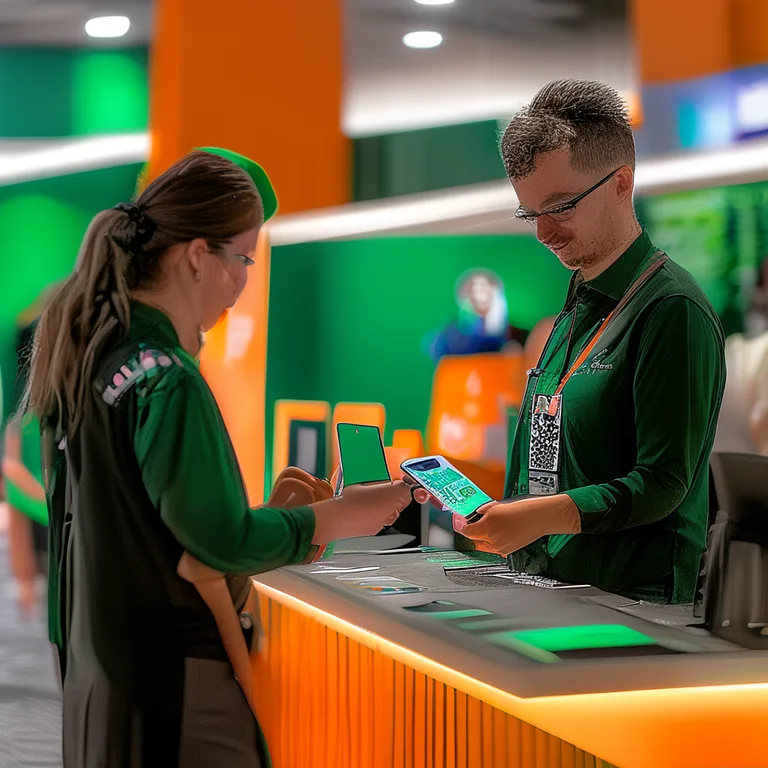
For B2B events, attendee check-in is more than just scanning tickets — it's the first data touchpoint of the event. QR code check-in speeds up entry lines and captures attendance data in real time. For exhibitors, lead capture is the primary reason they attend. QR scanning at booths lets vendors capture attendee contact details instantly, with CSV export for post-event follow-up. Evntle Lead Capture provides this capability natively, connecting attendee data directly to vendor CRM workflows.
B2B Event Management Metrics That Matter
What gets measured gets managed. For B2B events, the metrics you track should align directly with your stated objectives. Here are the key performance indicators that matter most:
| Metric | What It Measures | Why It Matters for B2B |
|---|---|---|
| Qualified leads captured | Number of attendee-vendor interactions with contact data collected | Primary ROI signal for exhibitors and sponsors |
| Vendor satisfaction score | Post-event survey rating from exhibitors | Predicts vendor retention for future events |
| Bump-in efficiency | Time from vendor arrival to stall readiness | Indicates operational smoothness and site planning quality |
| Incident resolution time | Average time from incident logging to resolution | Measures live operations responsiveness |
| Attendee repeat rate | Percentage of attendees who return year-over-year | Signals long-term event value and community strength |
According to the 2025 B2B Event Benchmark Study, 72% of organisers who track vendor satisfaction scores report higher exhibitor retention rates compared to those who don't. Similarly, events that implement digital incident management see 38% faster resolution times than those relying on manual processes. These numbers aren't just interesting — they're actionable. Every metric in the table above can be improved with the right tools and workflows.
Evntle Analytics & Insights provides live dashboards for vendor performance, attendance tracking, and end-of-event summary reports. Instead of spending days compiling spreadsheets after the event, you get real-time visibility during the event and instant reports the moment it ends.
"The organisers who win in B2B are not the ones with the biggest budgets. They're the ones who capture the best data and act on it fastest."
— Evntle Analytics Team
What's the Best Software for B2B Event Management?
Choosing B2B event management software is a significant decision. The right platform streamlines vendor coordination, attendee management, and live operations. The wrong one adds friction and frustration. Here's what to look for:
Essential Features for B2B Event Software
- Vendor application management — structured forms, review workflows, and approval tracking.
- Site planning and stall assignment — visual floor maps with drag-and-drop assignment.
- Real-time communication — notifications for vendors and staff without relying on email.
- Incident management — digital logging, severity assignment, and resolution tracking.
- Analytics and reporting — live dashboards and post-event summaries.
- Multi-device access — works on phones, tablets, and desktops for distributed teams.
Many organisers start with generic project management tools or event registration platforms, then bolt on spreadsheets for vendor management. This creates data silos and manual reconciliation work. An integrated platform like Evntle Platform combines vendor management, site planning, incident tracking, ticketing, and analytics in one system — purpose-built for Australian event organisers running markets, conferences, trade shows, and B2B gatherings.
Evntle offers a free plan with basic POS and event management features, making it easy to test the platform before committing. Paid plans start at $19/month with full vendor management, site planning, and analytics capabilities.
For organisers running food-focused B2B events like industry expos with catering components, Evntle POS and Evntle KDS integrate directly with the event management platform, providing end-to-end commerce capabilities from stall to sale to settlement.
B2B Event Management Trends to Watch in 2026
The B2B event landscape is evolving rapidly. Here are the trends shaping the industry and what they mean for organisers:
Hybrid and Data-Rich Events
While in-person B2B events have rebounded strongly, the data expectations have changed. Attendees and sponsors now expect the same level of data capture and follow-up that digital channels provide. QR-based lead capture, real-time analytics dashboards, and automated post-event reporting are no longer nice-to-haves — they're table stakes.
Vendor Experience as a Differentiator
B2B exhibitors have choices. They can attend dozens of trade shows and conferences each year. The events that win their repeat business are those that make the vendor experience frictionless: easy applications, clear communication, smooth bump-in, and measurable ROI. Organisers who treat vendors as customers — not just revenue sources — build loyalty that compounds year over year.
Operational Resilience Through Digital Incident Management
Post-pandemic, attendees and sponsors expect events to handle disruptions gracefully. Digital incident management systems that log, track, and resolve issues in real time have become a competitive advantage. Events that demonstrate operational maturity attract higher-value sponsors and more senior attendees.
For a comprehensive look at how these trends apply to Australian organisers, see our guide on Best Event Management Software Australia.
Frequently Asked Questions About B2B Event Management
Frequently Asked Questions
Q: What is the difference between B2B and B2C event management?
A: B2B event management focuses on business audiences with goals like lead generation, partnership building, and industry networking. B2C event management targets individual consumers with goals like ticket sales, brand awareness, and direct purchases. B2B events typically require more complex vendor coordination, higher expectations for data capture, and a stronger emphasis on ROI measurement.
Q: How do I measure ROI for a B2B event?
A: Measure ROI by tracking qualified leads captured, sponsor revenue generated, attendee satisfaction scores, and post-event pipeline influenced. Use lead capture tools to collect attendee data at booths, then follow up within 48 hours to maximise conversion. Compare these outcomes against total event costs to calculate true ROI.
Q: What's the best way to manage vendors for a B2B trade show?
A: Use a dedicated vendor management platform that handles applications, approvals, stall assignments, compliance documents, and communication in one system. Avoid email threads and spreadsheets, which become unmanageable beyond 30-40 vendors. Digital site planning tools with visual floor maps also prevent stall assignment errors and bump-in confusion.
Q: How far in advance should I start planning a B2B event?
A: Start planning at least 5-6 months in advance for events with 100+ attendees or 30+ vendors. Secure the venue first, then open vendor applications 3-4 months out. Launch attendee marketing 2-3 months before the event date. For recurring events, build reusable templates and vendor databases to compress the planning cycle significantly.
Q: What incident management system should a B2B event use?
A: Use a digital incident management system that allows staff to log issues from mobile devices with severity levels, photos, and notes. Real-time alerts should notify the right team members immediately. The system should track resolution status and maintain a complete incident history for post-event review and liability protection.
Q: How can I improve vendor retention for my B2B event?
A: Improve vendor retention by making the exhibitor experience frictionless: streamlined applications, clear communication, smooth bump-in logistics, and measurable ROI through lead capture. Survey vendors after each event and act on their feedback. Vendors who feel valued and see concrete business results will return year after year.
B2B event management is a complex discipline that rewards preparation, systems thinking, and data-driven decision making. From vendor applications and site planning to live incident management and post-event analytics, every component contributes to the overall success of your event. The organisers who thrive are those who invest in integrated tools that eliminate manual work, provide real-time visibility, and deliver actionable insights. Whether you're running your first industry forum or your fiftieth trade show, the principles remain the same: treat vendors as partners, capture data religiously, and build systems that scale. Explore Evntle Event Management Software to see how an integrated platform can transform your B2B event operations from chaotic to controlled.
More from Evntle
B2B Software for Events: The Complete 2026 Guide
B2B software for events explained: vendor management, POS, and analytics. Compare top platforms and start free today.

Attendee Management: 10 Steps to Run Smoother Events
Master attendee management with 10 proven steps to reduce no-shows, speed up check-in, and boost vendor sales. Get the complete guide now.

Arts and Crafts Fair Near Me: Your Complete 2025 Guide
Find the best arts and crafts fair near me with our 2025 guide. Discover local markets, vendor tips, and event tools. Start exploring today!

Aquatics and Recreation: Your Complete Event Guide
Plan and run successful aquatics and recreation events with Evntle. Vendor management, POS, ticketing & safety tools. Start your free account today!
📋 Embed this feed on your website:
<script src="https://maylalabs.com/api/embed?api_key=mayla_site_f1cb1e95fff884263b19125c9f830c929bc45b4d&limit=5" defer></script>