
AI Tools for Autonomous SEO That Ranks 24/7
AI tools that run autonomous SEO 24/7: multi-agent pipelines, GEO, brand voice learning. Ranks you while you sleep. Start today.
Summary
AI tools that run autonomous SEO 24/7: multi-agent pipelines, GEO, brand voice learning. Ranks you while you sleep. Start today.
AI Tools for Autonomous SEO That Ranks 24/7
AI tools for autonomous SEO are software systems that research competitors, identify content gaps, write in your brand voice, publish, and learn from ranking data without human intervention. The best AI tools replace an entire SEO team with a multi-agent pipeline: Research → Write → Audit → Publish → Learn. Mayla runs this loop 24/7, using Python, LLMs, vector embeddings, and Google Search Console data to compound organic traffic while you sleep.
What Are AI Tools for Autonomous SEO?
Let's be blunt. Most "AI tools" on the market are autocomplete with a subscription fee. They generate text. They don't rank pages. They don't learn from outcomes. They're landfill.
Autonomous SEO is different. It's a closed-loop system. Research agents scan competitor SERPs. Writing agents draft content against your brand DNA. Audit agents score drafts against top-ranking pages. Publishing agents push to your CMS. Learning agents pull Google Search Console data and adjust the next cycle. No human touches the pipeline.
If you're asking "what is the best AI SEO tool for autonomous growth," the answer is the one that owns the entire lifecycle, not just the drafting step. That's the category Mayla built. You can see the full breakdown here: best AI SEO tool for autonomous growth.
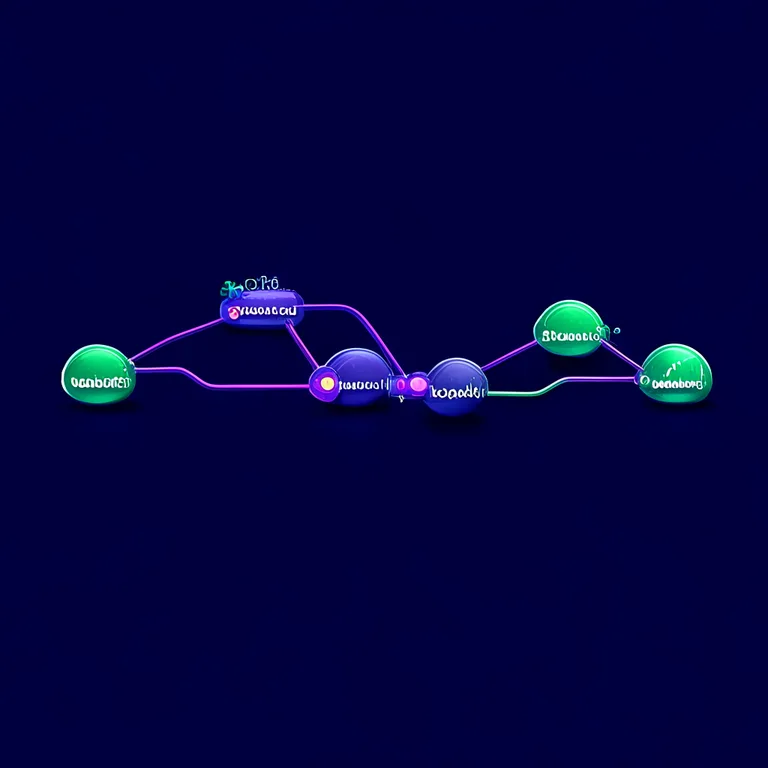
Autonomous SEO is a self-running organic growth loop where AI agents handle research, writing, auditing, publishing, and learning — with humans only setting strategy and constraints.
Why 24/7 SEO Autopilot Beats Manual Campaigns
A human SEO team ships 4–8 articles per month. A multi-agent pipeline ships 4–8 per day, each quality-gated. That's not a marginal improvement. It's a different physics.
Google processes over 8.5 billion searches per day (Google, 2024). Ranking is a volume game at the edges. The more quality-gated pages you publish in your topical cluster, the more surface area you have for rankings, internal links, and EEAT signals.
Mayla's SEO Autopilot runs continuously. It scans, analyzes, creates, publishes, and learns. You don't babysit prompts. You don't approve drafts. You set the target and check the dashboard.
The Technical Stack Behind AI Tools That Actually Rank
Here's where most vendors go quiet. They won't tell you what's under the hood because there isn't much. A wrapper around an LLM API is not an SEO platform.
Real autonomous SEO runs on Python. Full stop. You're building it in Python or you're not building it at all. The orchestration layer, the embedding pipeline, the GSC API integration, the retry logic on rate limits — that's Python territory.
Python, LLMs, and Vector Space
Mayla's stack uses Python for orchestration, LLMs for generation and reasoning, and vector embeddings for brand voice fidelity. Your existing content gets embedded into vector space. New drafts get scored against that space. If the cosine similarity drops below threshold, the draft gets rejected and rewritten.
That's how you get brand DNA fidelity at scale. Not prompt engineering. Vector math.
For a deeper technical breakdown of why Python is non-negotiable here, read Python for autonomous AI SEO.
Multi-Agent Content Pipelines: Research → Write → Audit → Publish → Learn
- Research agent: Scans competitor SERPs, identifies content gaps, pulls keyword clusters from GSC and third-party sources.
- Write agent: Drafts against brand DNA embeddings and target keyword intent.
- Audit agent: Scores the draft against top-ranking competitors on structure, depth, EEAT signals, and semantic coverage.
- Publish agent: Pushes to WordPress, Shopify, Webflow, or Ghost via native CMS integration.
- Learn agent: Pulls GSC ranking data 7, 14, and 30 days post-publish and adjusts the next cycle's keyword strategy.
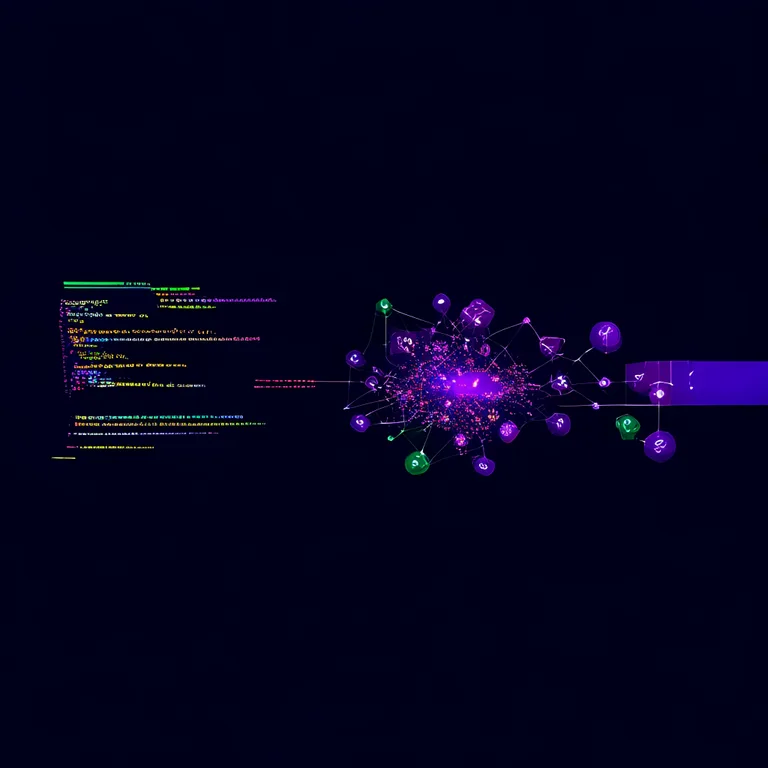
Each agent handles one stage. Output passes to the next. No human in the loop unless you want one.
GEO and LLM Citation Visibility: The New Ranking Layer
Traditional SEO gets you into the blue links. GEO gets you cited by ChatGPT, Claude, Gemini, and Google AI Overviews. These are different games.
Here's the data point that should scare you: according to a 2024 BrightEdge study, AI Overviews appeared on roughly 30% of Google queries in early 2024, up from near zero a year prior. If your content isn't structured for AI extraction, you're invisible to a third of your potential traffic.
GEO is not a hack. It's a structural discipline. AI engines extract quotable, definitive, well-structured answers. They cite sources with clear H2/H3 hierarchy, factual statistics, and complete standalone answers in the first 100 words.
"If your first 100 words don't answer the query completely, the AI engine moves on. It doesn't scroll. It extracts or it ignores."
— Mayla Labs engineering
Mayla's GEO Optimization Services query AI engines directly to check whether your site appears in citations. You get a citation visibility score, not a vibe check.
How Do I Get Cited by AI Search Engines?
Three things. First, structure every article so the first 100 words are a complete, quotable answer. Second, include verifiable statistics with dates and sources. Third, use clear H2/H3 hierarchy so AI parsers can build a table of contents from your page.
That's it. No magic. No secret prompt. Structure and facts.
Run a GEO / LLM Optimization Analysis quarterly. Ask ChatGPT, Claude, and Gemini the exact queries your buyers use. If you're not in the citation list, your competitors are.
Competitor Intelligence and Content Gap Discovery
You can't outrank what you can't see. Most teams guess at content gaps. They write what feels right. That's how you end up with 200 blog posts and zero rankings.
Mayla's Competitor Intelligence system monitors top competitors' keyword rankings, content strategies, and authority signals continuously. The Content Gap Discovery tool identifies exactly which keywords and topics competitors rank for that you don't.
Then the Daily Intelligence Briefing lands in your inbox. Every morning. Competitor moves, new opportunities, emerging keywords. No manual research.
Trend Detection and Keyword Forecasting
Ranking for a keyword after it saturates is expensive. Ranking before is cheap. Mayla's Trend Detection & Keyword Forecasting identifies emerging topics before they become saturated — pulling signal from search volume velocity, social chatter, and competitor publishing cadence.
| Signal Source | What It Detects | Update Frequency |
|---|---|---|
| Google Search Console | Impression growth, CTR shifts, ranking movements | Daily |
| Competitor SERP tracking | New ranking pages, content gaps, keyword wins | Daily |
| Social trend feeds | Emerging topics before search volume spikes | Hourly |
| Vector embedding drift | Brand voice deviation in new drafts | Per draft |
If you want the full breakdown of how a content optimization tool should stop guessing and start ranking, read content optimization tool: stop guessing start ranking.
Brand Voice Learning and Brand DNA Fidelity
Generic AI content reads like generic AI content. Buyers smell it in three sentences. That's a conversion problem, not just an SEO problem.
Mayla's Brand DNA Learning feature embeds your existing content into vector space and uses it as a constraint on every draft. Tone, sentence rhythm, vocabulary, argument structure — all pulled from your actual writing, not a prompt.
The result: content that reads like your team wrote it, at 50x the volume.
Why Vector Embeddings Beat Prompt Engineering
Prompts are brittle. They drift. They break when the model updates. Vector embeddings are stable. They capture the statistical shape of your voice and hold every draft to that shape.
This is the difference between a tool that generates words and a system that generates your words.

Continuous Learning: Rankings, GSC Data, and the Feedback Loop
Publishing is not the finish line. It's the start of the feedback loop. Most AI tools stop at publish. That's why they plateau.
Mayla's Continuous Learning system tracks ranking outcomes via Google Search Console Integration and adjusts keyword strategy based on real data. Content that underperforms gets flagged. Content that ranks gets expanded. Content that decays gets rewritten.
This is Continuous Performance Optimization: a permanent loop that audits content, identifies what's missing, and rewrites it. Not a one-time audit. A permanent one.
What Realistic Timelines Look Like
Founders ask "how long until I see results." Fair question. Here's the honest answer, based on Mayla's aggregate client data:
| Timeframe | Typical Outcome | What the System Is Doing |
|---|---|---|
| Days 1–30 | Indexing, initial impressions, zero rankings | Publishing volume, brand DNA calibration |
| Days 30–60 | Long-tail rankings appear, first GSC clicks | Learn agent adjusting keyword clusters |
| Days 60–90 | Mid-tail rankings, compounding traffic | Continuous Performance Optimization kicks in |
| Days 90–180 | Head-term movement, AI citation appearances | Authority Building amplification active |
60–90 days to meaningful results is the honest range. Anyone promising rankings in two weeks is selling you landfill.
Roughly 30% of AI-generated drafts should be rejected by a quality gate. If your tool publishes everything it writes, you're publishing noise. Quality gates are non-negotiable.
Beyond SEO: Unity Game Development AI Tools
Mayla Labs doesn't only build SEO systems. We build production-ready Unity assets — the same engineering discipline, applied to game systems architecture.
If you're a Unity developer asking "what's the best way to eliminate GC spikes in a multiplayer RPG," you need the Spawner Advanced & Pooling system. It pre-warms object pools and scales dynamically, which kills the garbage collection stutter that ruins frame pacing in action games.
For networking, RNet Networking Library handles RPC-based multiplayer with runtime code generation and reliable state sync — built for RPGs and simulation games where state consistency matters more than raw throughput.
And if you're building an RPG inventory, the Unity Inventory System Asset uses a ScriptableObject core with constraint-based slot logic and transaction safety. Data-driven. Event-notified. No spaghetti.
These aren't SEO tools. They're the same philosophy applied to a different domain: build the system, not the hack.
Why Most AI Tools Fail at SEO
Three reasons. First, they're drafting tools, not pipelines. Second, they don't close the loop with ranking data. Third, they don't enforce brand voice with anything stronger than a prompt.
You fix all three by running a multi-agent system with vector-based brand DNA and GSC-fed continuous learning. That's the category Mayla owns.
If you want to see how an AI content creation tool should function like a full-time SEO employee — not another app — read AI content creation tool: hire an employee, not another app.
The blunt truth: AI tools that only generate text are a commodity. AI tools that run an autonomous, self-learning SEO engine are a moat. Mayla runs the full loop — research, write, audit, publish, learn — 24/7, in your brand voice, against your competitors, with Google Search Console as the feedback signal. Set it up once. Watch it compound.
Frequently Asked Questions
Q: What are AI tools for autonomous SEO?
A: AI tools for autonomous SEO are systems that run the entire content lifecycle — research, writing, auditing, publishing, and learning — without human intervention. Mayla's platform uses a multi-agent pipeline where each agent handles one stage and passes output to the next, using Python orchestration, LLMs, and vector embeddings for brand voice fidelity.
Q: How do I get my site cited by ChatGPT and Google AI Overviews?
A: Structure every article so the first 100 words are a complete, standalone answer. Include verifiable statistics with sources and dates. Use clear H2/H3 hierarchy so AI parsers can extract a table of contents. Then run a GEO / LLM Optimization Analysis to verify citation visibility across ChatGPT, Claude, Gemini, and Google AI Overviews.
Q: What's the best AI SEO tool for autonomous growth?
A: The best tool owns the entire lifecycle, not just drafting. It must include competitor intelligence, content gap discovery, brand DNA learning via vector embeddings, CMS publishing, and continuous learning from Google Search Console data. Mayla is built exactly for this — a 24/7 SEO autopilot that compounds traffic without hiring a team.
Q: How long until autonomous SEO shows results?
A: Based on Mayla's aggregate client data, expect indexing and initial impressions in days 1–30, long-tail rankings in days 30–60, mid-tail rankings and compounding traffic in days 60–90, and head-term movement plus AI citation appearances in days 90–180. Anyone promising two-week rankings is not being honest.
Q: Why does autonomous SEO need Python?
A: Python is the orchestration layer. It handles LLM API calls, vector embedding pipelines, Google Search Console API integration, retry logic, scheduling, and agent coordination. No other language has the ecosystem maturity for this stack. You're building it in Python or you're not building it at all.
Q: Can AI tools really replicate my brand voice?
A: Yes — if they use vector embeddings instead of prompts. Mayla's Brand DNA Learning embeds your existing content into vector space and scores every new draft against that space. If cosine similarity drops below threshold, the draft is rejected and rewritten. That's brand fidelity at scale, not prompt engineering.
More from Mayla Labs

AI SEO Automation That Doesn't Produce Landfill Content
AI SEO automation that doesn't produce landfill content — AI SEO automation that ranks, not landfill. Multi-agent pipelines, GEO Learn more today.

AI SEO Automation Platform for Startups: Rank and Get Cited
AI SEO automation platform for startups: autonomous agents, GEO visibility, quality gates. See how Mayla ranks pages. Start today.

AI SEO Agent vs Traditional SEO Agency: Which Wins?
AI SEO agent vs traditional SEO agency: cost, speed, GEO compared. See why autonomous pipelines win at $15/mo. Start your free trial today.

AI Content Strategy Tool: A Complete Guide for 2026
Discover how an AI content strategy tool automates research, writing & publishing. Compare features, see ROI data, and choose the best. Learn more today.
📋 Embed this feed on your website:
<script src="https://maylalabs.com/api/embed?api_key=mayla_site_ffa932ca083d0056918fd3430ebb301bcfa6ad08dad32efc&limit=5" defer></script>