
AI SEO Automation Platform That Actually Ranks Content
AI SEO automation platform that actually ranks content. Autonomous multi-agent pipeline, GEO optimization, under $5 per page. Start your $1.99 trial today.
Summary
AI SEO automation platform that actually ranks content. Autonomous multi-agent pipeline, GEO optimization, under $5 per page. Start your $1.99 trial today.
AI SEO Automation Platform That Actually Ranks Content
An AI SEO automation platform that actually ranks content is an autonomous multi-agent system that researches competitors, discovers content gaps, writes in your brand voice, audits against a 95%+ SEO quality gate, publishes to your CMS, and then learns from Google Search Console data to rewrite what underperforms. Mayla Labs built exactly that: a Research → Write → Audit → Publish → Learn pipeline where five specialised agents handle the entire workflow with zero human intervention. Most AI content tools generate words. This generates ranking pages at under $5 per page.
Why Most AI SEO Automation Platforms Fail to Rank Content
Here's the uncomfortable truth. The market is flooded with tools that call themselves an AI SEO automation platform. They generate 3,000 words of generic sludge, publish it, and wonder why nothing ranks.
The failure isn't the AI. The failure is the architecture. Single-prompt content generation is a toy. You type a keyword, you get an article, you publish it. There's no research. No competitor analysis. No quality gate. No feedback loop. No brand voice. It's a content mill with a ChatGPT wrapper, and Google's Helpful Content system has been eating those for breakfast since 2022.
Real SEO is an engineering problem. It has inputs, processes, quality gates, and measurable outputs. If your "AI SEO tool" doesn't have all four, you're not automating SEO. You're automating the production of content that will never rank.
Google's March 2024 core update deindexed or demoted an estimated 45% of low-quality AI-generated content across affected niches. Publishing volume without quality gates is now an active liability, not a strategy.
What Makes an AI SEO Automation Platform Actually Rank Content
Ranking content requires four things that a single-prompt tool cannot deliver: real research, real brand voice, real quality gates, and a real feedback loop. Miss any one and you're building on sand.
1. Multi-agent content pipelines, not single prompts
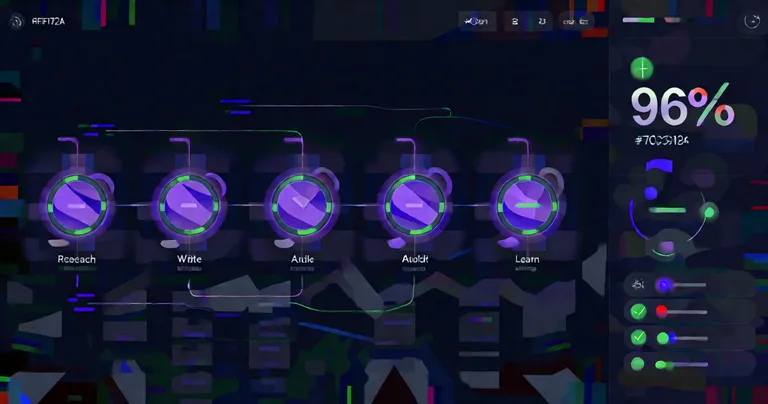
Mayla's AI content creation pipeline runs five specialised agents. The Researcher pulls SERP data, competitor rankings, and search intent. The Writer drafts against a brand DNA profile. The Auditor scores the draft against 40+ SEO and GEO criteria. The Designer generates featured images and multimodal assets. The Publisher pushes to your CMS via REST API.
Each agent has a job. Each agent has a quality gate. Nothing ships below 95%.
2. Brand voice learning via vector embeddings
Generic AI content reads like generic AI content. That's detectable, and Google's spam classifiers are good at it. Mayla's Brand DNA Learning encodes your tone, vocabulary, sentence rhythm, and audience targeting into a vector embedding. Every article is generated against that embedding. The output sounds like you wrote it — because mathematically, it does.
This is the difference between an AI SEO automation platform that ranks content and one that produces content-shaped noise.
3. GEO: optimizing for AI search citation, not just blue links
Google isn't the only search engine anymore. ChatGPT, Claude, Gemini, Perplexity, and Google AI Overviews are now primary discovery surfaces. If your content isn't structured for extraction, you don't get cited. You get ignored.
Generative Engine Optimization (GEO) means structuring content with definitive statements, clean heading hierarchies, data tables, and FAQ blocks so LLMs can quote you. Mayla's GEO / LLM optimization analysis audits how your site performs across every major AI engine, then rebuilds the content layer to maximise citation probability.
"SEO used to be a battle for position 1. Now it's a battle to be the sentence an AI quotes. Those are two different engineering problems, and most agencies are still solving the first one."
— Mayla Labs engineering team
How the Mayla AI SEO Automation Platform Actually Works
Here's the pipeline, step by step. No marketing fluff. Just the mechanics.
- Research. The Researcher agent scans your top 10 competitors, pulls their ranking keywords, identifies content gaps, and forecasts emerging trends before they saturate.
- Write. The Writer agent drafts against your Brand DNA embedding, targeting a specific keyword cluster with commercial intent.
- Audit. The Auditor agent scores the draft. Keyword placement, heading hierarchy, internal links, GEO structure, readability, factual density. Below 95%? It gets sent back.
- Design. The Designer agent generates featured images, short-form video snippets, and social assets.
- Publish. The Publisher agent pushes to WordPress, Shopify, Webflow, or Ghost. Then it distributes to LinkedIn, X, Facebook, and Pinterest.
- Learn. Every 24 hours, the system pulls Google Search Console data. Pages losing position get flagged. Pages with high impressions but low CTR get rewritten. The loop never stops.
The Google Search Console feedback loop is what separates autonomous SEO from set-and-forget content. Rankings decay. Search intent shifts. A system that doesn't learn from real ranking data is just a publishing schedule with extra steps.
Cost-per-ranking-page economics vs. traditional agencies
This is where the math gets brutal for agencies. Traditional SEO content costs $150 to $500 per article. Add research, editing, and publishing overhead and you're at $400 to $800 per published page. Most of those pages never rank.
Mayla's pipeline produces pages at under $5 each. Same quality gate. Better GEO structure. Continuous optimization included.
| Cost Factor | Traditional Agency | Freelance Writer | Mayla AI SEO Platform |
|---|---|---|---|
| Cost per article | $150 – $500 | $80 – $250 | Under $5 |
| Research included | Sometimes | Rarely | Always (automated) |
| Quality gate | Human review | Human review | 40+ automated criteria, 95%+ threshold |
| GEO optimization | Rarely offered | No | Built-in |
| Continuous optimization | Monthly retainer | Not included | 24/7 automated loop |
| Time to publish | 2 – 4 weeks | 1 – 2 weeks | Hours |
Competitor Intelligence and Content Gap Discovery
You can't outrank what you can't see. Mayla's Competitor Intelligence monitors your top 10 competitors daily — their keyword rankings, publishing cadence, EEAT signals, and content strategy shifts. Every morning you get a briefing. No dashboards to check. No reports to dig through.
Content Gap Discovery is the companion system. It surfaces keywords competitors rank for that you don't, prioritised by search volume, competition, and commercial intent. That's your content roadmap, generated automatically.
Trend detection and keyword forecasting
By the time a keyword is saturated, it's too late. Mayla's Trend Detection uses search volume velocity, social signals, and competitor publishing cadence to identify emerging topics 4 to 12 weeks before they peak. You publish first. You rank first. Everyone else plays catch-up.
Continuous Performance Optimization: The Feedback Loop That Compounds
Publishing is not the finish line. It's the starting gun.
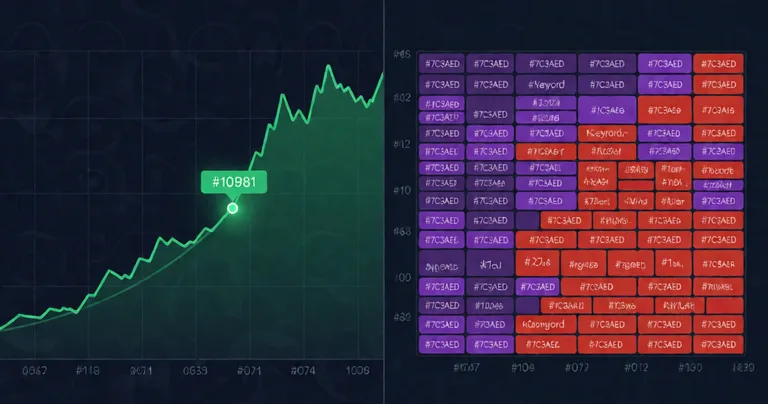
Mayla's Continuous Performance Optimization pulls Google Search Console data daily. Impressions, clicks, CTR, average position. Pages losing ground get flagged. Pages with high impressions but low CTR get their titles and meta descriptions rewritten. Pages ranking for the wrong intent get restructured.
This is the compounding effect. Every article you publish becomes an asset that gets monitored, optimized, and improved automatically. After 12 months, you don't have 200 articles. You have 200 articles that have each been optimized a dozen times against real ranking data.
| Optimization Cycle | What Gets Checked | Action Taken |
|---|---|---|
| Daily | GSC impressions, clicks, CTR, position | Flag underperformers, log competitor moves |
| Weekly | Keyword cannibalization, internal link gaps | Rewrite titles, add internal links |
| Monthly | Content decay, intent drift, GEO citation gaps | Restructure sections, add data tables, refresh statistics |
| Quarterly | Full content audit against competitor coverage | Rewrite underperforming pages, publish gap-fill content |
Mayla's Google Search Console integration doesn't just report data. It feeds the strategy engine. Every rewrite decision is driven by real ranking outcomes, not guesswork.
Beyond SEO: Multimodal Authority and Adjacent Systems
Ranking in 2025 isn't just about text. AI search engines favour sites with dense multimodal footprints — images, video, social signals, structured data. Mayla's Authority Building generates featured images, short-form video, and social snippets for every article. The short form video generator turns blog posts into platform-native TikToks, Reels, and YouTube Shorts without a video editor.
And here's the thing about engineering-led SEO: the same discipline applies to other domains. The Mayla Labs team also builds production-grade systems for Unity game developers and Australian event organisers — two verticals where performance engineering and operational reliability matter more than marketing copy.
Unity game development assets and performance engineering
RealSoft Games — the game development arm of Mayla Labs — ships Unity assets that hold a 16.6 ms frame budget under load. Object pooling that eliminates garbage collection spikes. Networking libraries with zero per-call allocations. Leveling systems with 40+ curve algorithms. These aren't tutorials. They're production tools used in shipped games like Redemptions Guild, a 1-4 player co-op action RPG built on RealSoft's server-authoritative money systems and pooling architecture.
Same engineering mindset. Different domain. That's the through-line at Mayla Labs.
Australian event management and vendor operations
Evntle handles vendor management, POS, compliance tracking, and site planning for Australian markets and festivals. Running on Evntle at scale: Geelong Central Market, a recurring event with 40+ stallholders. Vendor applications, food safety certificate tracking, QR check-in, cashless POS via Zeller EFTPOS, and post-event analytics — all in one operational system.
Event organisers don't need another spreadsheet. They need infrastructure that doesn't break during bump-in. That's the same principle as an SEO platform that doesn't break when Google ships a core update.

How Do I Get Started with an AI SEO Automation Platform?
You don't need a six-month onboarding. You don't need a strategy consultant. You need to connect your site, let the system learn your brand voice, and start publishing.
- Start the 7-day trial. $1.99 gets you up to 4 AI-generated articles, full brand DNA setup, website analysis, and a GEO audit.
- Let Brand DNA Learning run. The system ingests your existing content and builds a vector embedding of your voice. Usually takes under an hour.
- Connect Google Search Console. This activates the feedback loop. Without it, you're flying blind.
- Connect your CMS. WordPress, Shopify, Webflow, or Ghost. Publishing happens automatically.
- Review the daily intelligence briefing. Competitor moves, keyword opportunities, recommended publish order. One email. Five minutes.
- Scale. Yearly plan is $15/month billed annually with unlimited articles. At that price, cost-per-ranking-page drops below $1 at volume.
Most agencies charge $2,000 to $5,000 per month for a fraction of this output. The SEO writing assistant brutal truth breakdown covers why that model is collapsing.
An AI SEO automation platform that actually ranks content isn't a content generator. It's an autonomous system with research, brand voice, quality gates, GEO structure, and a continuous learning loop. Mayla Labs built it. It runs 24/7. It costs less than a single agency article per month. The only question is whether you want to keep paying for content that doesn't rank, or switch to a system that compounds.
Frequently Asked Questions
Q: What is an AI SEO automation platform?
A: An AI SEO automation platform is software that autonomously handles the entire SEO content workflow — competitor research, keyword discovery, content writing, quality auditing, publishing, and continuous optimization — without requiring a human to write or edit each article. Mayla Labs runs a five-agent pipeline (Researcher, Writer, Auditor, Designer, Publisher) that produces pages scoring 95%+ on SEO criteria before publishing.
Q: How do I make AI content actually rank on Google?
A: You need four things: real competitor research, brand voice consistency, a quality gate that blocks low-scoring content, and a Google Search Console feedback loop that rewrites underperforming pages. Generic AI content fails because it skips all four. Mayla's Brand DNA Learning encodes your voice via vector embeddings, and its Continuous Performance Optimization rewrites pages based on real ranking data.
Q: What's the best AI SEO tool for small businesses on a budget?
A: The best AI SEO tool for SMBs is one that replaces agency costs entirely. Mayla's pricing starts at $15/month billed annually with unlimited articles. Compare that to $150-$500 per article from a traditional agency. The 7-day trial at $1.99 includes brand DNA setup, website analysis, and a GEO audit — enough to evaluate output quality before committing.
Q: What is Generative Engine Optimization (GEO) and why does it matter?
A: GEO is the practice of structuring content so AI search engines — ChatGPT, Claude, Gemini, Perplexity, and Google AI Overviews — can extract and cite it. It uses definitive statements, clean heading hierarchies, data tables, and FAQ blocks. As AI search surfaces grow, GEO determines whether your content gets quoted or ignored. Mayla's GEO analysis audits your site across every major AI engine and rebuilds the content layer for maximum citation probability.
Q: How much does AI SEO automation cost compared to hiring an agency?
A: Traditional agencies charge $150-$500 per article plus monthly retainers. Mayla produces ranking pages at under $5 each. At the yearly plan rate of $15/month, cost-per-ranking-page drops below $1 at volume. The economic gap isn't marginal — it's roughly 100x.
Q: Can AI SEO automation work for ecommerce, local services, and SaaS?
A: Yes, if the platform supports vertical-specific structuring. Mayla handles ecommerce product pages, local service suburb pages, and SaaS comparison content. The pipeline adapts structure based on search intent — transactional pages get different treatment than informational guides. The quality gate enforces the correct structure automatically.
More from Mayla Labs

AI SEO Employee for Small Business: Autonomous Growth
AI SEO employee for small business: autonomous multi-agent pipeline that researches, writes, audits, and publishes. Start your $1.99 trial today.

AI SEO Automation Software With Quality Gates
AI SEO automation software with quality gates: 5-agent pipeline, 95% audit threshold, GEO optimization. See how autonomous SEO ranks Learn more today.

AI SEO Automation That Doesn't Produce Landfill Content
AI SEO automation that doesn't produce landfill content — AI SEO automation that ranks, not landfill. Multi-agent pipelines, GEO Learn more today.

AI SEO Automation Platform for Startups: Rank and Get Cited
AI SEO automation platform for startups: autonomous agents, GEO visibility, quality gates. See how Mayla ranks pages. Start today.
📋 Embed this feed on your website:
<script src="https://maylalabs.com/api/embed?api_key=mayla_site_ffa932ca083d0056918fd3430ebb301bcfa6ad08dad32efc&limit=5" defer></script>