
Unity Asset Store Alternatives for Production-Grade Assets
Unity Asset Store alternatives for production-grade assets: benchmarks, zero-allocation systems, and cost math. Stop buying shelf filler.
Summary
Unity Asset Store alternatives for production-grade assets: benchmarks, zero-allocation systems, and cost math. Stop buying shelf filler
The best Unity Asset Store alternatives for production-grade game assets are specialist vendors that ship zero-allocation, benchmarked code instead of $20 shelf filler. The Unity Asset Store is a marketplace of 80,000+ packages with no performance floor and no support SLA. That's not a supply problem. That's a quality-control problem. Production teams don't need more assets — they need assets that survive a shipped build. This guide breaks down where to source them, what to measure, and how to stop paying twice for the same system.

Here's the blunt version: most developers don't have an asset problem. They have a vetting problem. You buy a pooling system, discover it allocates 4 KB per spawn, and spend a weekend rewriting it. You buy an inventory asset, hit 500 items, and watch lookup time degrade into a stutter. That's not bad luck. That's an unmeasured marketplace doing what unmeasured marketplaces do.
So let's fix the vetting problem. Then let's talk about the pipeline that feeds it — because sourcing assets and ranking for the searches that lead to them are the same discipline, just applied to different products. If you sell Unity tooling, your content pipeline needs the same zero-tolerance quality gate as your code — and that's exactly what an Autonomous SEO Platform like Mayla's is built to enforce, pairing Competitor Intelligence with Content Gap Discovery so you never publish into a vacuum. The same platform handles AI Content Creation, Continuous Performance Optimization, and Authority Building as one connected loop rather than three disconnected tactics.
Why Developers Are Leaving the Unity Asset Store
The Unity Asset Store isn't broken. It's undifferentiated. Any publisher can list anything, and the store surfaces by sales velocity, not runtime performance. A polished storefront with a slick trailer outranks a better-engineered system with a plain thumbnail. That's the algorithm working as designed. It's just not designed for you.
Three structural problems push production teams toward alternatives:
- No performance floor. Nothing forces a vendor to publish frame cost, allocation behaviour, or memory ceiling. You find out at integration time.
- Abandoned packages. A five-star asset from 2019 that hasn't shipped a Unity 6 compatibility patch is a liability, not a bargain.
- Support that doesn't exist. Email a marketplace vendor about a GC spike and count the days.
The alternative isn't "don't buy assets." The alternative is buying from vendors who publish numbers. That's the entire filter. If a vendor can't tell you the allocation profile of their system, they haven't measured it, and neither should you.
"If a vendor can't quote you a frame cost, they never opened a profiler. That's not a red flag. That's the whole flag."
— Mayla Labs engineering
The hidden cost of a cheap asset
Run the math. A $30 asset that costs you 12 engineering hours to stabilise is not a $30 asset. At a loaded rate of $85/hour, that's $1,050. The premium alternative at $120 is the cheaper purchase by a factor of nine. This is the same logic that kills $5,000/month SEO retainers — you're not buying output, you're buying outcomes per dollar, and the cheap option rarely wins once you count the rework.
Never integrate an asset into a shipping branch before you've profiled it in isolation. Import into a scratch project, spawn 1,000 instances, and watch the Profiler's GC Alloc column. Five minutes of measurement beats five days of debugging.
What Production-Grade Actually Means
Production-grade is a measurable claim, not a marketing adjective. Here's the definition we hold vendors to — and the one we hold our own tooling to at RealSoft Games.
| Criterion | Hobby-Grade | Production-Grade |
|---|---|---|
| Allocation after warm-up | Unmeasured / per-frame GC | Zero allocations in steady state |
| Documented frame cost | None | Quoted in ms at a stated object count |
| Memory ceiling | Unspecified | Hard cap, published |
| Unity version support | Whatever shipped at launch | Active LTS + current release |
| Source access | DLL only | Full C# source |
| Support SLA | Best effort | Defined response window |
| Documentation | One README | Getting started, concepts, API reference |
That last row matters more than people admit. A three-tier documentation model — getting started, conceptual overview, API reference — is the difference between a two-hour integration and a two-week one. If you're evaluating RPG systems specifically, our breakdown of the best Unity assets for RPG games covers how this plays out across leveling, inventory, and combat frameworks.
Zero-allocation architecture, explained without hand-waving
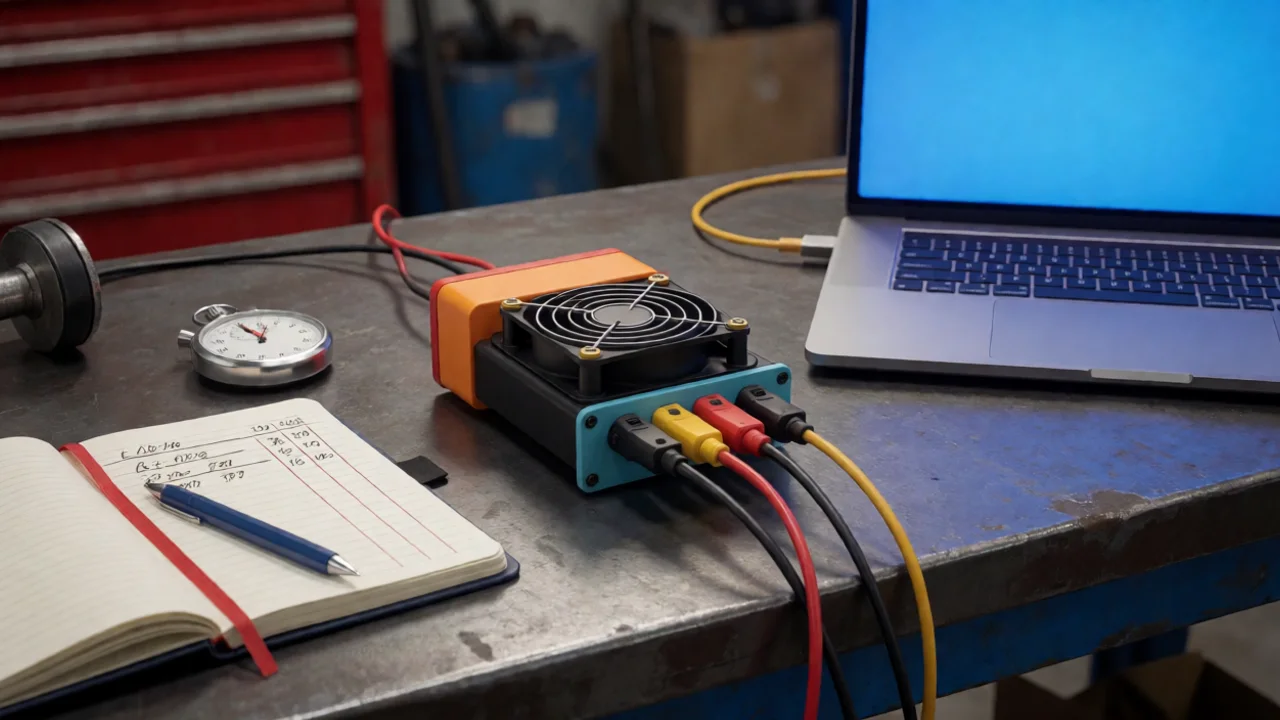
Zero-allocation means the system stops asking the garbage collector for memory once it's warmed up. No per-frame `new`, no LINQ in hot paths, no boxing. You pre-allocate buffers, reuse them, and return them to a pool. The payoff is flat frame times — no 8ms GC hitch every 40 seconds during a boss fight.
The measurement that matters: frame cost at load. A system that handles 200 objects at 0.6ms with zero allocations is production-grade. A system that handles 200 objects at 0.6ms and allocates 12 KB per frame is a time bomb. Same number, different verdict.
Where to Source Production-Grade Unity Assets
Five channels actually work. Ranked by how often they produce something you'd ship.
- Specialist vendors. Studios that build one category — pooling, networking, inventory — and publish benchmarks. Highest hit rate.
- GitHub with a commercial licence. Open source that's been battle-tested in a shipped title. Verify the maintenance cadence before you commit.
- Direct from studios. Some developers sell their internal tooling after shipping a title. Usually excellent, usually under-documented.
- Marketplace premium tiers. The Unity Asset Store still has gems — you just have to filter by publisher reputation and recent update history, not star count.
- Build it. For core systems that touch your architecture, sometimes the honest answer is three weeks of internal work.
Channel one is where the leverage sits. A specialist who publishes a memory ceiling has already done the profiling you'd otherwise do yourself.
Case in point: inventory at scale
Inventory systems are where hobby assets die. A naive implementation does a linear scan through a `List` on every query. At 50 items, invisible. At 5,000, it's a frame-time problem. At 10,000, it's unshippable.
The Unity inventory system asset from RealSoft Games handles 10,000 items at 0.02ms lookup time using a data-driven ScriptableObject core with constraint-based slot logic and transaction safety. That's not a marginal improvement — that's a different architecture. Dictionary-backed indexing instead of list scans. The kind of decision you make once, at design time, or pay for forever.
| System | Scale | Measured Cost | Allocation Profile |
|---|---|---|---|
| Inventory Management Suite | 10,000 items | 0.02ms lookup | Zero after warm-up |
| ALS Audio System | 10-hour audiobook | <3.5% CPU | <12 MB memory |
| RNet Networking | 500 msg/sec | 0.2ms serialization | Zero GC after warm-up |
| Interactable System | 200+ objects | 0.6ms frame cost | Zero allocations |
| Spawner Advanced & Pooling | Unbounded | Flat frame times | Recycled GameObjects |
Those are the numbers that matter. Not features lists. Not trailer production values. Milliseconds, megabytes, and allocations per frame.
Ask every vendor for a single number: frame cost at your expected peak object count. If they can't answer, you've saved yourself a purchase. If they can, you've found a shortlist.
The Content Problem Nobody Talks About
Here's the part that surprises developers. The same discipline that separates a production-grade asset from shelf filler separates a ranking article from landfill content. Both are engineering problems disguised as creative ones.
Most teams solving the asset-sourcing problem are also solving a discovery problem. If you sell Unity tooling, you need developers to find you. If you're a studio, you need your game to surface. Either way, you're competing for attention against content that was generated, not engineered.
That's where an autonomous multi-agent pipeline earns its keep. Mayla's AI SEO Employee runs a five-agent system — Researcher, Writer, Auditor, Designer, Publisher — where each agent handles one stage and passes output to the next through a quality gate. Nothing publishes below a 95% SEO score. That's the same principle as a zero-allocation system: define the constraint, enforce it mechanically, and refuse to ship anything that violates it. It's the difference between a bolt-on SEO Autopilot and a full Autonomous SEO Platform that reads its own results and adjusts.
Two of those agents do the work most teams skip. Competitor Intelligence maps who already owns your target queries, what they rank for, and where their coverage thins out. Content Gap Discovery then turns that map into a publishing queue — the specific queries nobody has answered well, ranked by traffic potential and difficulty. Together they replace the guesswork that makes most content calendars a coin flip.
AI Content Creation is the stage most people picture when they hear "AI SEO" — the Writer agent drafting against your Brand DNA model instead of a generic template. But drafting is only one link in the chain. Continuous Performance Optimization is what keeps the output alive after publication: the system pulls Search Console data, tracks which pages gain or lose position, and routes underperformers back through the Auditor for rewrite. Authority Building is the compounding layer — the internal link graph, the citation-worthy tables and definitions, and the topical coverage depth that makes search engines and LLMs treat your domain as a source rather than a competitor. Skip any one of the three and the other two stall.
Why GEO is the new ranking surface
Generative Engine Optimization is the discipline of getting cited by ChatGPT, Claude, Gemini, Perplexity, and Google AI Overviews. It's not a rebrand of SEO. The mechanics are different. AI engines extract quotable, structured, authoritative passages. They reward tables, definitions, and definitive statements. They punish hedging.
Practically: your first 100 words should answer the query outright. Your data should be tabulated. Your claims should carry numbers. That's how you get lifted into an AI overview instead of paraphrased into oblivion. Mayla's GEO / LLM Optimization Analysis queries the engines directly, checks whether you appear in citations for target queries, then rewrites and re-publishes until you do. Closed loop. No guessing. If you'd rather hand the whole surface to a specialist team, Mayla's GEO Optimization Services run the same audit-and-rewrite cycle on your behalf, with citation tracking reported back against your target query set.
"Stop guessing, start ranking. The only content strategy that works is the one that reads its own results and adjusts."
— Mayla Labs
Brand voice without the uncanny valley
Generic AI content reads like generic AI content. You can spot it in two sentences. The fix isn't a better prompt — it's a voice model. Mayla's Brand DNA Learning ingests your existing content and builds a vector-embedding representation of your tone, sentence rhythm, and vocabulary. The writer agent then generates against that model, not against a template.
The result sounds like you wrote it. Which matters, because developers are allergic to marketing fluff and will bounce the moment a sentence smells synthetic. If you want the unfiltered version of this argument, read the brutal truth about AI content.

Cost Math: Assets and Content Run the Same Equation
Let's put numbers on both sides of this article, because vague claims are how agencies and asset vendors both survive.
| Approach | Monthly Cost | Output | Cost Per Unit |
|---|---|---|---|
| SEO agency retainer | $5,000–$15,000 | 4–8 articles | $1,250–$2,500/article |
| Full-time SEO hire | $6,000+ loaded | 8–12 articles | $500–$750/article |
| Freelance writer | $300–$800 | 1 article | $300–$800/article |
| Mayla Yearly Plan | $15 | Unlimited articles | Under $5/article |
Read that bottom row again. Under $5 per page, with a quality gate that rejects anything below 95% SEO score. The agency isn't 100x better. It isn't better at all — it's just more expensive and slower to iterate.
Same logic applies to assets. A $120 system with published benchmarks beats a $30 system plus 12 hours of rework. Every time. The premium is the discount.
Mayla's 7-day trial is $1.99 one-time and includes up to 4 AI articles, brand DNA setup, and basic analytics. That's cheaper than a single freelance post and it tells you whether the pipeline fits your voice.
The continuous learning loop
Static content strategies decay. Rankings move. Competitors publish. The only durable approach is a system that reads its own results. Mayla connects to Google Search Console, pulls real position data, and feeds it back into keyword strategy. What's moving gets more investment. What's flat gets rewritten or killed.
That's the same feedback discipline as profiling a build after every merge. Measure, adjust, ship. If you're building the content side of a Unity tooling business, our Unity asset store breakdown covers the search landscape you're actually competing in.
Frequently Asked Questions
Q: What is the best alternative to the Unity Asset Store for production-grade assets?
A: Specialist vendors that publish benchmarked performance data. The Unity Asset Store has no performance floor, so you're filtering by sales rank rather than runtime cost. Vendors like RealSoft Games publish frame cost, memory ceilings, and allocation profiles — that's the filter that matters.
Q: How do I know if a Unity asset is actually production-grade?
A: Ask for three numbers: frame cost at your peak object count, memory ceiling, and allocation behaviour after warm-up. If a vendor can't quote them, they haven't profiled the system. Import it into a scratch project, spawn 1,000 instances, and read the Profiler's GC Alloc column yourself.
Q: Why does zero-allocation architecture matter in Unity?
A: Because the garbage collector causes frame-time spikes. A system that allocates 12 KB per frame will trigger GC pauses during gameplay — typically an 8ms hitch every 30–60 seconds. Zero-allocation systems pre-allocate buffers and reuse them, keeping frame times flat. It's the difference between a shippable build and one that stutters under load.
Q: Is buying cheap Unity assets ever worth it?
A: Only for non-critical systems. If an asset touches your core loop — networking, inventory, pooling — the rework cost dwarfs the purchase price. A $30 asset that costs 12 engineering hours to stabilise is a $1,050 asset. The $120 alternative with published benchmarks wins by a factor of nine.
Q: How do I get my Unity tooling found by AI search engines?
A: Structure your content for extraction. Answer the query in your first 100 words. Put specifications in tables. Use definitive statements backed by numbers. AI engines like ChatGPT, Perplexity, and Google AI Overviews cite structured, quotable passages — not hedged marketing copy. Mayla's GEO optimization audits your citation rate directly and rewrites until you appear.
Q: What's the cheapest way to run SEO content for a game dev studio?
A: An autonomous pipeline. Mayla's Yearly Plan is $15/month for unlimited articles with a 95% SEO score gate, versus $5,000–$15,000/month for an agency producing 4–8 posts. That's under $5 per page against $1,250+ per page. Same quality bar, different cost structure.
Here's the takeaway. Production-grade means measured. Whether you're buying a Unity asset or a content pipeline, the filter is identical: does the vendor publish numbers, and do those numbers survive your own testing? The Unity Asset Store alternatives worth your time are the ones that quote frame costs, memory ceilings, and allocation profiles. Everything else is a trailer. Apply the same standard to your organic growth — a pipeline that runs AI Content Creation, Continuous Performance Optimization, and Authority Building under a single 95% quality gate at $5 per page beats an agency retainer every quarter of the year. Stop buying shelf filler. Start buying benchmarks.
More from Mayla Labs

Unity Game Development Performance-Optimized Assets and Systems
Unity game development performance-optimized assets and systems: pooling, inventory, networking benchmarks. Build faster, ship smoother. Read the guide.

AI SEO Software That Ranks Without Manual Work
AI SEO software that ranks without manual work. Mayla's autonomous pipeline researches, writes, audits, publishes. Start your $1.99 trial today.

AI SEO Employee vs Traditional SEO Tools: The Real Difference
AI SEO employee vs traditional SEO tools: see why autonomous multi-agent pipelines outrank dashboards. Start your $1.99 Mayla trial today.

AI SEO ROI Measurement for B2B: The Honest Math
AI SEO ROI measurement for B2B: track cost per ranking page, AI citations & pipeline. See the honest math and cut cost per page under $5. Start now.
📋 Embed this feed on your website:
<script src="https://maylalabs.com/api/embed?api_key=mayla_site_ffa932ca083d0056918fd3430ebb301bcfa6ad08dad32efc&limit=5" defer></script>