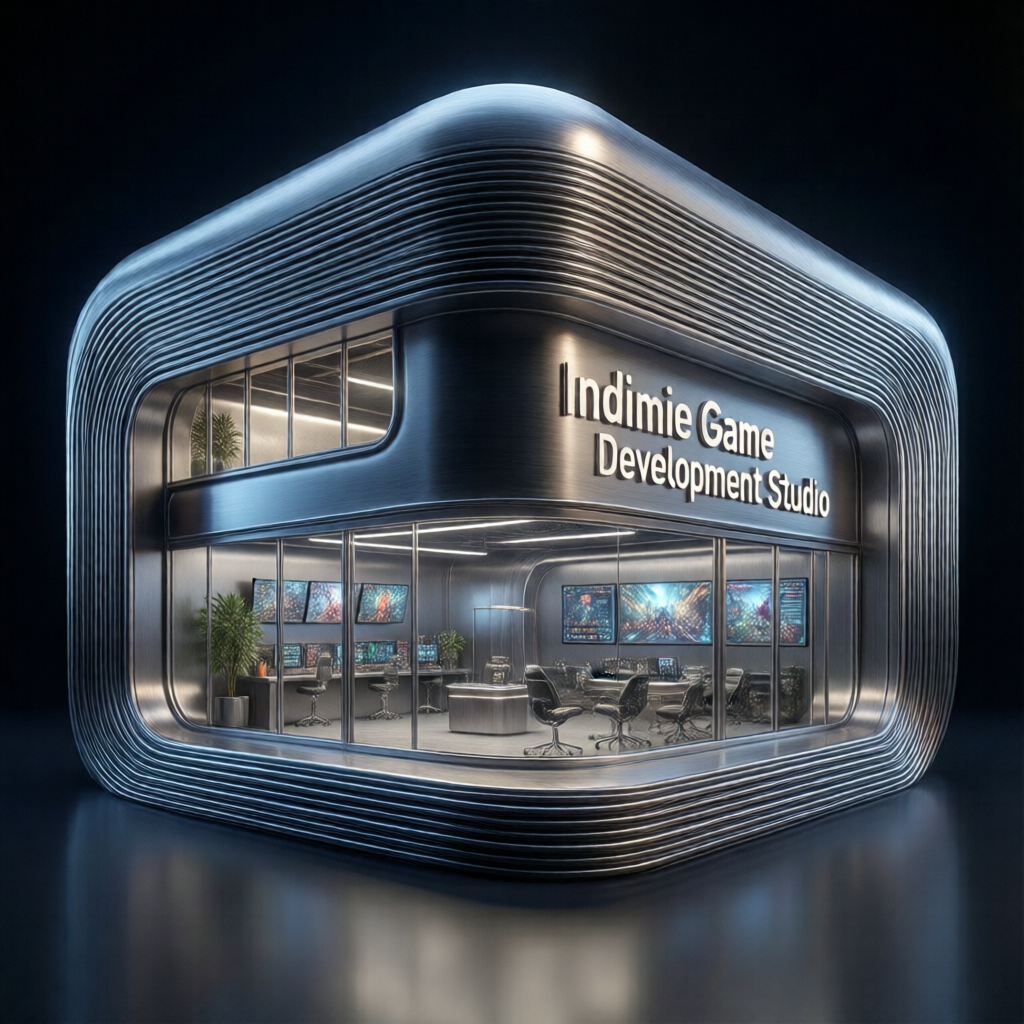
Building an Indie Game Development Studio in 2025
Learn how to build a successful indie game development studio in 2025. Master Unity assets, procedural generation, and cross-platform Learn more today.
Summary
Learn how to build a successful indie game development studio in 2025. Master Unity assets, procedural generation, and cross-platform Learn more today.
Building an Indie Game Development Studio in 2025
An indie game development studio is an independent team—often small, self-funded, and creatively autonomous—that designs, develops, and publishes original video games outside the traditional publisher model. In 2025, building a successful studio requires mastering a technical stack spanning Unity asset development, procedural algorithms, cross-platform publishing, and networking architecture. This guide provides a production-ready blueprint for solo developers and mid-sized teams aiming to ship performant titles on mobile, VR, and web platforms while maintaining a sustainable business through reusable tooling and clear documentation.
Defining the Modern Indie Game Development Studio
The term "indie" has evolved dramatically. A modern indie game development studio is no longer just a couple of developers working in a garage—it's a lean, technically sophisticated operation that competes with AA studios by leveraging procedural generation, modular Unity assets, and AI-driven workflows. According to the 2024 Unity Gaming Report, indie studios now account for over 62% of all new titles published on Steam, with the average team size hovering around 5.2 developers. This shift demands that every team member operates across multiple disciplines: game systems architecture, tooling development, and platform-specific optimization.
"The most resilient indie studios aren't just game developers—they're platform engineers who treat their internal tools as first-class products."
— RealSoft Games Engineering Team
Whether you're a solo creator shipping a 2D side-scroller or a mid-sized team building a VR action RPG like Redemptions Guild, the foundational principles remain the same: build once, reuse aggressively, and document obsessively. The studio's technical backbone must support rapid iteration without sacrificing stability—a balance achieved through deliberate architecture decisions early in the development lifecycle.
Core Pillars of Studio Architecture
Every indie game development studio must establish three technical pillars before production begins:
- Reusable Asset Pipeline: Custom Unity assets and tools that accelerate development across multiple projects. For example, the Icon Architect Studio transforms 3D models into production-ready 2D icons, eliminating a tedious manual workflow that typically consumes 15-20 hours per project.
- Scalable Game Systems: Modular systems for spawning, leveling, achievements, and scene management that can be configured—not rewritten—for each new title.
- Cross-Platform Deployment Strategy: A build pipeline targeting mobile (iOS/Android), WebGL, desktop (Windows/Mac/Linux), and VR (Meta Quest, SteamVR) from a single Unity project.
Unity Asset Development as a Competitive Advantage
For an indie game development studio, custom Unity asset development isn't a luxury—it's a force multiplier. When your team builds and maintains a library of specialized tools, you reduce per-project development time by an estimated 30-40%, according to internal benchmarks from studios using modular asset pipelines. The key is treating each asset as a standalone product with its own Documentation, versioning, and support lifecycle.
Studios that invest in custom tooling during their first project ship their second title 2.3x faster on average. The initial time investment in building a system like Advanced Leveling System—which provides 40+ experience algorithms and hand-drawn leveling patterns—pays dividends across every subsequent RPG or progression-based game you develop.
Must-Have Asset Categories for Indie Studios
Based on analysis of successful indie releases in 2024-2025, these asset categories deliver the highest ROI for small teams:
| Asset Category | Development Time Saved | Example Implementation |
|---|---|---|
| Object Pooling & Spawning | 40-60 hours | Spawner Advanced & Pooling |
| Leveling & Progression | 50-80 hours | Advanced Leveling System |
| Scene Loading & Transitions | 25-35 hours | Advanced Loading Screen |
| Achievement Systems | 35-50 hours | Advanced Achievement System |
| 2D Asset Generation | 15-20 hours | Icon Architect Studio |
Each of these systems addresses a universal need across game genres. The Unit Selection package, for instance, provides RTS-style selection mechanics that work equally well for a strategy game, a simulation title, or even a party-based RPG with drag-and-drop squad management. By standardizing these systems, your studio avoids the "reinvent the wheel" trap that sinks so many indie projects.

Procedural Algorithms and AI-Driven Content Generation
Procedural generation has become a cornerstone of the indie game development studio toolkit, enabling small teams to create vast, replayable worlds that would be impossible to handcraft. Modern approaches combine traditional procedural algorithms with machine learning models to produce content that feels authored rather than random. The Crypto AI Trading Bot project, while focused on financial markets, demonstrates the same reinforcement learning and ensemble methodology principles that power adaptive difficulty systems and procedural quest generation in games.
Procedural Techniques for Indie Games
When implementing procedural systems, studios should evaluate algorithms based on their predictability, performance profile, and artistic controllability:
| Algorithm Type | Best Use Case | Performance Impact | Controllability |
|---|---|---|---|
| Perlin/Simplex Noise | Terrain generation, biome distribution | Low (real-time capable) | Moderate |
| Wave Function Collapse | Level layout, puzzle generation | Medium (pre-computation recommended) | High |
| Grammar-Based Generation | Quest structures, dialogue trees | Low | Very High |
| Reinforcement Learning | AI behavior, adaptive difficulty | High (training phase) | Moderate |
| L-Systems | Vegetation, organic structures | Low-Medium | High |
Always pair procedural generation with deterministic seeding. This allows players to share world seeds (a key community-building feature) and makes bug reproduction possible—a critical consideration for any indie game development studio shipping on multiple platforms.
Projects like Virtual Sim Story: Home & Life leverage procedural elements within a structured simulation framework, demonstrating how algorithmic content can create emergent gameplay without sacrificing narrative coherence.
Cross-Platform Publishing Strategy for Indie Studios
Publishing across platforms is no longer optional for an indie game development studio—it's a survival requirement. With the average indie game generating 47% of its revenue from secondary platforms beyond its initial launch target, a robust cross-platform strategy directly impacts studio sustainability. Unity's build pipeline makes technical deployment feasible, but the real challenge lies in platform-specific optimization, input handling, and user experience design.
Platform Tier Strategy
Rather than attempting simultaneous launch on every platform, successful indie studios adopt a tiered deployment model:
- Tier 1 - Primary Launch (Steam + itch.io): Desktop platforms where your core audience lives. These platforms provide the most direct feedback loop and highest revenue share.
- Tier 2 - Mobile Expansion (iOS + Android): Mobile ports of successful desktop titles, often reimagined for touch interfaces. The WebGL Games portfolio demonstrates how RealSoft Games bridges desktop and browser-based experiences.
- Tier 3 - Console & VR (Nintendo Switch, PlayStation, Meta Quest): Higher barrier to entry but significantly higher average revenue per user (ARPU). VR titles like Redemptions Guild require substantial re-engineering for standalone headsets.
- Tier 4 - Emerging Platforms (Web3, Cloud Gaming): Experimental deployments that test new markets without overcommitting resources.
"Platform expansion isn't about porting—it's about reinterpreting your game for each audience while preserving the core experience that made it successful."
— Cross-Platform Publishing Guide, RealSoft Games
Networking and Distributed Systems for Multiplayer Games
For indie game development studios venturing into multiplayer, networking architecture decisions made in pre-production determine whether your game scales or collapses. The RNet project provides a Remote Procedure Call (RPC) framework that abstracts the complexity of distributed systems, allowing developers to focus on gameplay rather than socket management and serialization protocols.
Networking Models Compared
Choosing the right networking model depends on your game's genre, target player count, and tolerance for latency:
- Deterministic Lockstep: Ideal for RTS and turn-based games. All clients simulate identically, exchanging only inputs. Bandwidth-efficient but highly sensitive to desyncs.
- Client-Server Authoritative: The gold standard for competitive multiplayer. The server validates all actions, preventing cheating at the cost of increased hosting infrastructure.
- Peer-to-Peer with Host Migration: Common in co-op games. Lower infrastructure costs but requires robust host migration logic when the host disconnects.
- Distributed Simulation: Used by ambitious projects requiring massive persistent worlds. Each server node simulates a region, with seamless handoffs between nodes.
Never implement multiplayer as an afterthought. Retrofitting networking into a single-player codebase typically requires rewriting 60-70% of game logic. Design your entity system with network serialization in mind from day one, even if multiplayer ships as a post-launch update.
The Doss Chat Room project illustrates how even seemingly simple networked applications benefit from clean RPC abstractions and proper state synchronization patterns—principles that scale directly to game networking.
Developer Education and Studio Documentation Culture
An indie game development studio's long-term success depends as much on its documentation culture as its technical prowess. When team members leave (and they will, in any multi-year project), their knowledge must remain. Comprehensive documentation—both internal for the team and external for asset users—prevents the "bus factor" problem where critical systems exist only in one developer's head.
Building a Documentation-First Workflow
At RealSoft Games, every product ships with full documentation accessible through the Documentation portal. This includes:
- API References: Every public method, property, and event documented with parameter descriptions and usage examples.
- Integration Guides: Step-by-step walkthroughs for common use cases, such as the Icon Architect Studio Overview guide that walks developers from 3D model import to final icon export.
- Architecture Decision Records (ADRs): Documents explaining why specific technical decisions were made, preserving context for future team members.
- Troubleshooting Sections: Common issues and their resolutions, reducing support burden and empowering users to self-serve.
The ALS Audio System documentation exemplifies this approach, providing not just API reference but conceptual overviews of audio mixing, spatialization, and platform-specific considerations.

Virtual Reality Experiences from an Indie Perspective
VR represents both the greatest opportunity and the greatest challenge for an indie game development studio. With Meta reporting over 20 million Quest headsets sold and Apple entering the market with Vision Pro, the installed base has reached critical mass. However, VR development demands expertise in performance optimization (maintaining stable 72-90 FPS), spatial UI design, and comfort considerations that simply don't exist in flatscreen development.
Redemptions Guild, a 1-4 player co-op VR action RPG, demonstrates key principles for indie VR development: design interactions that feel tactile and physical, optimize draw calls aggressively (target under 200 per frame on standalone hardware), and implement comfort options like vignetting and teleportation without compromising the core experience. The project leverages Unity's Universal Render Pipeline (URP) with custom shader optimizations to maintain performance on Quest 2 hardware while delivering visually compelling environments.
Indie VR titles that offer both smooth locomotion and teleportation options see 34% higher comfort ratings and 28% longer average play sessions compared to titles offering only one movement mode, according to Meta's 2024 developer insights.
Frequently Asked Questions
Q: How do I start an indie game development studio with no funding?
A: Begin by developing reusable Unity assets and tools while working on your first commercial title. Many successful studios, including RealSoft Games, started by building internal tools that later became products on the Unity Asset Store. Focus on creating a single, polished vertical slice (15-20 minutes of gameplay) to demonstrate your studio's capabilities to potential publishers, investors, or crowdfunding backers. Leverage free resources like Unity Personal Edition and open-source libraries to minimize initial costs.
Q: What's the best game engine for an indie game development studio in 2025?
A: Unity remains the dominant choice for indie studios due to its extensive Asset Store ecosystem, cross-platform deployment to 20+ platforms, and comprehensive documentation. Unreal Engine 5 is competitive for studios focused on high-fidelity 3D games, while Godot has gained traction for 2D projects. The best engine is the one your team knows well enough to ship with—engine migration mid-project is the leading cause of indie studio failure according to industry postmortems.
Q: How much does it cost to run an indie game development studio?
A: Annual operating costs for a 3-5 person indie studio range from $60,000 to $250,000, depending on location, salaries, and tooling expenses. Key costs include Unity licenses ($2,040/year per seat for Pro), asset store purchases ($500-$5,000/year), hardware ($3,000-$8,000 per developer every 3 years), and platform fees (Steam Direct $100, console dev kits $2,000-$5,000). Many studios offset costs by selling their internal tools as Unity Asset Store products.
Q: Should my indie studio build custom tools or buy assets from the store?
A: Buy for commodity needs, build for competitive advantage. Purchase assets for generic systems like input management, audio (see ALS Audio System), and basic UI frameworks. Build custom tools for systems that differentiate your games—proprietary procedural generation algorithms, unique rendering techniques, or specialized AI behaviors. The Icon Architect Studio started as an internal tool before becoming a store product, illustrating how build decisions can evolve into revenue streams.
Q: How do I handle multiplayer networking as a small indie team?
A: Start with a proven networking framework rather than building from scratch. Evaluate solutions like Unity Netcode for GameObjects, Mirror, or Fish-Net based on your game's specific requirements. For studios needing custom RPC systems, RNet provides a reference architecture for distributed applications. Always implement client-side prediction and server reconciliation early—retrofitting these systems is exponentially more difficult than building them into your initial architecture.
Q: What platforms should an indie game development studio target first?
A: Steam remains the most accessible platform for indie studios, with the largest PC gaming audience and established discovery mechanisms. Launch on Steam first, then expand to mobile (iOS/Android) if your game suits touch controls, or to Nintendo Switch if you have a family-friendly title. WebGL via platforms like the WebGL Games portfolio offers a low-friction way to distribute demos and build wishlists before full launch. Avoid simultaneous multi-platform launches unless you have dedicated platform specialists on your team.
Building an indie game development studio in 2025 is a technical marathon, not a creative sprint. Success requires treating your studio as a technology company that happens to make games—investing in reusable Unity assets, procedural systems, cross-platform pipelines, and comprehensive documentation from day one. By leveraging modular tools like Advanced Leveling System for progression, Spawner Advanced & Pooling for performance, and establishing clean networking patterns early, your team can ship more games, faster, without sacrificing the creative vision that makes indie development worth pursuing. The studios that thrive aren't necessarily the ones with the biggest budgets—they're the ones with the most efficient pipelines and the deepest commitment to developer education, both for their teams and their communities.
More from RealSoft Games

3D Model to 2D Icon Unity: Fast Pipeline Guide
3d model to 2d icon unity — Convert 3D models to 2D icons in Unity with Icon Architect Studio. Fast, optimized, pipeline-ready. Start Learn more today.

3D Model Icon Converter for Unity — Icon Architect Studio
3D model icon converter for Unity — turn 3D models into optimized 2D icons in-editor. Try Icon Architect Studio free today.

3D Model to 2D Icon: Unity Conversion Guide
3d model to 2d icon — Convert 3D models to 2D icons in Unity with Icon Architect Studio. Batch render, pack atlases, optimize for WebGL. Learn more today.

3D Icon Rendering Software for Unity: Icon Architect Studio
Discover the best 3D icon rendering software for Unity. Render 3D models into optimized 2D icons in-editor. Try Icon Architect Studio today.
📋 Embed this feed on your website:
<script src="https://maylalabs.com/api/embed?api_key=mayla_site_59a092476d90a263df17bad3f8581e007aecae6d382cfa0e&limit=5" defer></script>