
AI SEO for Education: Autonomous Growth Guide
AI SEO for education: autonomous multi-agent pipelines that rank content and win LLM citations. Build your 24/7 SEO engine today.
Summary
AI SEO for education: autonomous multi-agent pipelines that rank content and win LLM citations. Build your 24/7 SEO engine today
AI SEO for education is the practice of using autonomous, multi-agent systems to research, write, audit, and publish content that ranks in both traditional search engines and generative AI answers. It replaces manual keyword chasing with a continuous loop: competitor intelligence, content gap discovery, brand-voice learning, and Google Search Console feedback. The result is compounding organic traffic without hiring an SEO team or babysitting prompts. If you run a university, edtech SaaS, or online course platform, this is how you build an engine that never sleeps.
Most education marketers are still writing blog posts by hand, guessing at keywords, and praying Google notices. That's not a strategy. That's a landfill of content nobody reads. The institutions winning organic search in 2026 aren't publishing more — they're publishing smarter, with systems that learn from every ranking change. This guide breaks down exactly how autonomous AI SEO works for education, why Python and LLMs are the technical backbone, and how to get cited by ChatGPT, Gemini, and Google AI Overviews.

Why AI SEO for Education Beats Manual Content Marketing
Education is one of the most competitive organic search verticals on the planet. Every university, bootcamp, MOOC platform, and tutoring service is fighting for the same high-intent queries: "best online MBA," "how to learn Python fast," "is a coding bootcamp worth it." Manual content teams cannot keep pace. They publish four posts a month and wonder why enrollment funnels stall.
Autonomous AI SEO changes the math. Instead of a human researching one keyword at a time, a multi-agent pipeline scans thousands of competitor rankings, identifies gaps, drafts content in your brand voice, audits it against top-ranking pages, publishes it, then feeds performance data back into the next cycle. It's not faster writing. It's a different category of operation.
The education sites ranking fastest aren't the ones with the biggest content teams. They're the ones with the tightest feedback loop between publishing and ranking data.
Here's the blunt truth: if your SEO process depends on a human remembering to check Search Console, you don't have a process. You have a hobby. The Mayla Platform runs the entire lifecycle — research, write, audit, publish, learn — without waiting for anyone to open a dashboard.
The Three Failure Modes of Education Content Marketing
- Keyword guessing. Teams target what they think students search for, not what the data proves they search for.
- Brand voice drift. Generic AI tools produce content that sounds like every other edtech blog. No differentiation, no trust, no EEAT signals.
- No feedback loop. Content gets published and forgotten. Nobody audits what ranked, what flopped, or why.
Each failure mode compounds. Bad keywords produce bad content. Bad content produces bad rankings. Bad rankings produce bad data. Bad data produces more bad keywords. The loop only breaks when you replace the human bottleneck with an autonomous system.
How Autonomous AI SEO and 24/7 SEO Autopilot Work
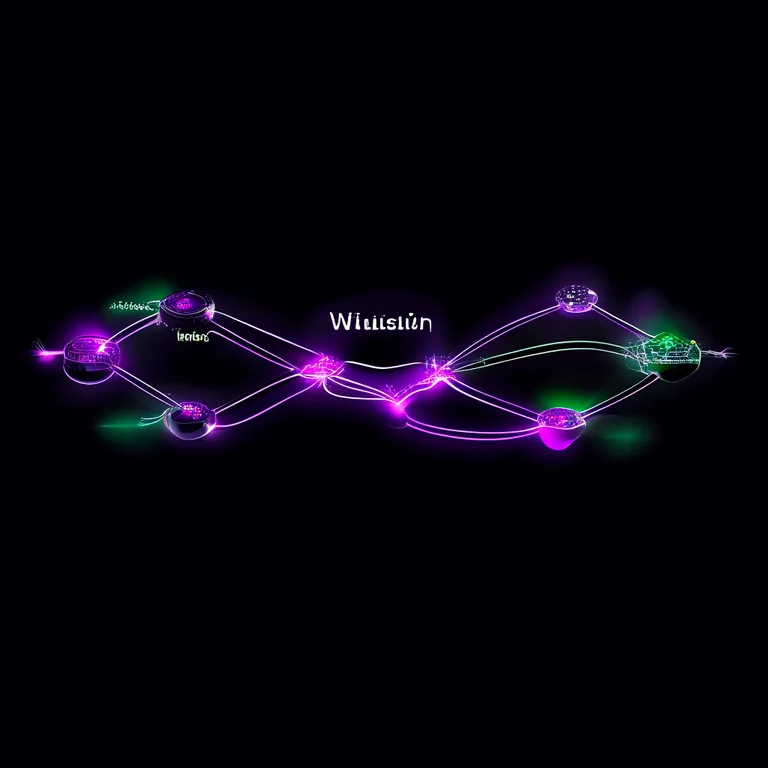
Autonomous AI SEO is not a plugin. It's an architecture. At the center is a multi-agent pipeline where each agent owns one stage of the content lifecycle and passes structured output to the next. Think of it as an assembly line where every station has a specialist and a quality gate.
The Five-Stage Multi-Agent Pipeline
- Research Agent. Scans competitor rankings, SERP features, and content gaps. Outputs a prioritized keyword and topic brief.
- Write Agent. Drafts content using brand DNA embeddings so the voice matches your existing material.
- Audit Agent. Scores the draft against top-ranking competitors for coverage, structure, EEAT signals, and keyword placement.
- Publish Agent. Pushes the approved content to your CMS — WordPress, Webflow, Shopify, or Ghost — with schema markup and internal links.
- Learn Agent. Pulls ranking and Search Console data, identifies what's underperforming, and rewrites or expands it.
This is the difference between a tool and an employee. A tool waits for instructions. The Mayla - AI SEO Employee runs the loop continuously, escalating only when human judgment is genuinely required.
"You're either building an autonomous SEO engine in Python, or you're not building an SEO engine at all. Everything else is a content treadmill."
— Mayla Labs Engineering
Why Python Is the Backbone
Python is not a preference. It's the only language with the ecosystem to run this stack end-to-end. You need LLM orchestration (LangChain, LlamaIndex), embeddings (OpenAI, Cohere, sentence-transformers), vector databases (Pinecone, Weaviate, pgvector), scraping and SERP APIs, and CMS SDKs. All of them are Python-first.
If you're evaluating the technical stack behind autonomous SEO, read Python for Autonomous AI SEO — it breaks down the exact libraries and architecture. The short version: Python gives you the glue between LLM reasoning, vector search, and publishing infrastructure. Without it, you're stitching together no-code tools that break the moment you need real logic.
Vector embeddings are how the system understands your brand voice. Every existing piece of content gets embedded into a vector space. New drafts are scored for cosine similarity against that space before they pass the audit gate.
Generative Engine Optimization and LLM Citation Visibility
Generative Engine Optimization — GEO — is the discipline of getting your content cited by AI engines like ChatGPT, Claude, Gemini, Perplexity, and Google AI Overviews. It's not the same as traditional SEO. Rankings still matter, but citations are the new currency. When a prospective student asks ChatGPT "what's the best online data science program," you either appear in the answer or you don't exist.
What GEO Actually Requires
- Quotable first paragraphs. AI engines extract the first 100 words. If your intro is fluff, you're invisible.
- Structured data tables. LLMs love extractable comparisons, statistics, and specifications.
- Definitive statements. Wishy-washy content gets skipped. Authoritative content gets cited.
- FAQ schema. Natural-language questions map directly to voice search and AI overview queries.
- Entity clarity. Your institution, programs, and faculty need to be machine-readable entities, not vague brand prose.
The GEO / LLM Optimization Analysis queries AI engines directly to check whether your site appears in citations for your target queries. It's the only honest way to measure GEO performance. Rankings tell you half the story. Citations tell you the other half.
SEO vs GEO: What Changes for Education Marketers
| Dimension | Traditional SEO | GEO / LLM Optimization |
|---|---|---|
| Primary goal | Rank on page 1 | Get cited in AI answers |
| Content format | Long-form blog posts | Quotable, structured, data-rich |
| Success metric | Impressions, clicks, position | Citation frequency, share of voice |
| Key signal | Backlinks, EEAT | Entity clarity, factual density |
| Update cadence | Quarterly refresh | Continuous optimization |
Most education institutions are still optimizing for the first column and ignoring the second. That's a mistake with a short shelf life. AI overviews already appear on a large share of education queries, and the share is growing every quarter.
Competitor Intelligence and Content Gap Discovery
You cannot outrank what you don't understand. Competitor intelligence in autonomous SEO means continuously monitoring your top rivals' keyword rankings, content strategies, and authority signals — then identifying the exact gaps where you can win.
What a Daily Intelligence Briefing Actually Contains
- New keywords your competitors started ranking for in the last 24 hours
- Content they published, updated, or removed
- Keyword difficulty shifts and emerging SERP features
- Content gaps: high-intent queries they rank for that you don't
- Trend signals: rising topics before they saturate
The Content Gap Discovery tool automates this entirely. It cross-references your domain against competitors, surfaces the keywords you're missing, and prioritizes them by traffic potential and difficulty. No more guessing which post to write next. The system tells you.
Content gap analysis without prioritization is just a list. The value is in ranking gaps by projected ROI, not in dumping 4,000 keywords into a spreadsheet nobody opens.
Competitor Benchmarking Data
| Metric | Manual SEO Team | Autonomous AI SEO |
|---|---|---|
| Keywords analyzed per week | 50–200 | 10,000+ |
| Content pieces published per month | 4–8 | 40–120 |
| Time to detect ranking drop | 2–4 weeks | 24 hours |
| Content refresh cadence | Quarterly | Continuous |
| Brand voice consistency | Variable | Vector-scored |
That's not a marginal improvement. That's a different operating category.
Brand Voice Learning and Brand DNA Fidelity
Generic AI content is the fastest way to destroy trust in education marketing. Prospective students can smell it. So can Google's helpful content systems. If your blog sounds like every other edtech site, you've already lost the differentiation battle.
Brand DNA Learning solves this. The system ingests your existing content — course pages, faculty bios, admissions essays, blog archives — and builds a vector representation of your voice. Every new draft gets scored against that representation before it passes the audit gate. If the similarity drops below threshold, the draft gets rewritten.
"Brand voice isn't a style guide PDF. It's a vector space. If you're not measuring it, you're not maintaining it."
— Mayla Labs Engineering
How Brand DNA Fidelity Is Measured
- Existing content is chunked and embedded into a vector database.
- A centroid embedding represents your brand's average voice.
- New drafts are embedded and scored for cosine similarity.
- Drafts below threshold are flagged for rewrite or human review.
- Approved content updates the centroid, refining the model over time.
The practical result: your autonomous system writes like your best human writer, at scale, without drift. For education institutions with multiple schools, departments, and program voices, this is the difference between a coherent brand and a fragmented mess.

Continuous Learning and Google Search Console Analytics
Publishing is the beginning, not the end. The Learn Agent pulls ranking data and Google Search Console metrics continuously, then feeds that data back into the research and writing stages. Content that underperforms gets audited, expanded, or rewritten. Content that overperforms gets analyzed for patterns and replicated.
What the Learning Loop Tracks
- Keyword position changes week-over-week
- Impressions, clicks, and CTR by page and query
- Which content formats correlate with ranking gains
- Which topics drive conversions, not just traffic
- Where competitors gained or lost ground
The Google Search Console Integration is what makes this honest. Without real ranking data, an autonomous SEO system is just guessing at scale. With it, the system compounds. Every cycle makes the next one smarter. This is what Continuous Performance Optimization means in practice: a permanent loop that audits, identifies gaps, and rewrites.
Education sites with long sales cycles benefit most from continuous optimization. A blog post that ranks in month one and converts in month nine needs to be maintained, not abandoned.
Unity Game Development Assets: The Parallel Technical Discipline
Mayla Labs isn't only an SEO company. The same engineering discipline that powers autonomous SEO pipelines also drives our Unity development tools. Game systems architecture and AI SEO share a core principle: build modular, data-driven systems that scale without human babysitting.
If you're building educational games, simulations, or gamified learning platforms, the Unity Assets for Game Developers guide covers production-ready systems for RPG mechanics, inventory, networking, and performance optimization. The RNet Networking Library handles RPC-based multiplayer with runtime code generation — critical for collaborative learning environments. The Unity Inventory System Asset provides a data-driven, ScriptableObject-based inventory core with transaction safety and event-driven notifications.
For developers building educational RPGs or simulation training tools, the How to Make an RTS in Unity architecture guide is a masterclass in modular system design. It's the same philosophy: separate concerns, data-driven logic, no spaghetti.
Why This Matters for EdTech
Gamified learning platforms live or die on performance. Garbage collection spikes kill immersion. Networking desyncs break collaboration. The Object Pooling System and Spawner Advanced & Pooling assets eliminate GC spikes by pre-allocating and reusing GameObjects. For multiplayer educational simulations, RNet provides reliable RPC calls and state synchronization without the overhead of heavier frameworks.
If you're building an edtech product with Unity, the Unity Multiplayer Complete Guide covers the full networking architecture. For RPG-style learning games, the Best Unity Assets for RPG Games in 2025 guide breaks down the exact asset stack you need.
Frequently Asked Questions
Q: What is AI SEO for education?
A: AI SEO for education is the use of autonomous, multi-agent systems to research, write, audit, and publish content that ranks in search engines and gets cited by AI engines like ChatGPT and Google AI Overviews. It replaces manual keyword research and content production with a continuous, self-improving pipeline that learns from ranking data.
Q: How do I get my education website cited by ChatGPT and Google AI Overviews?
A: You need Generative Engine Optimization. That means quotable first paragraphs, structured data tables, definitive authoritative statements, FAQ schema, and clear entity definitions. Run a GEO / LLM Optimization Analysis to check whether your site currently appears in AI citations for your target queries.
Q: What's the best AI SEO tool for autonomous growth in education?
A: The best tool is one that runs the entire lifecycle autonomously — research, write, audit, publish, learn — without requiring prompt babysitting. The Mayla Platform does this with a multi-agent pipeline and Google Search Console integration, so the system improves based on real ranking outcomes, not vibes.
Q: Why does brand voice matter so much for education content?
A: Education is a trust-driven vertical. Generic AI content destroys differentiation and triggers Google's helpful content penalties. Brand DNA Learning uses vector embeddings to score every draft against your existing voice, ensuring consistency at scale. Without it, you get content that sounds like everyone else.
Q: How long does it take to see results from autonomous AI SEO?
A: Most education sites see measurable ranking movement within 60–90 days, with compounding gains after 6 months as the learning loop refines keyword strategy. The system publishes continuously, so the content volume advantage compounds faster than manual teams can match.
Q: Can autonomous AI SEO work for small education businesses?
A: Yes — and it's often more valuable for smaller institutions because they can't afford an SEO team. The SEO Autopilot runs continuously for a fraction of the cost of a single hire, and it doesn't take holidays, forget to check Search Console, or need onboarding.
Education marketing is entering a phase where autonomous systems outperform manual teams by an order of magnitude. The institutions that build Python-based, multi-agent SEO pipelines now will own organic search and AI citations for the next decade. Everyone else will keep publishing four posts a month and wondering why enrollment stalled. The choice is binary. Build the engine, or get buried by the ones who did.
More from Mayla Labs

AI SEO Agency Alternative for Australian SMBs
AI SEO agency alternative for Australian SMBs: autonomous AI from $15/mo. Ditch the retainer. Try Mayla today.

Surfer SEO vs Mayla: Autonomous AI SEO That Ranks
Surfer SEO scores drafts. Mayla's autonomous AI SEO employee researches, writes, audits, and publishes ranking content. Start your $1.99 trial today.

AI SEO Automation Software for Australian SMBs
AI SEO automation software for Australian SMBs: replace agency retainers with a multi-agent pipeline that ranks. Start your $1.99 trial today.

AI SEO Citation Tracking Tools for AI Search Engines
Track AI citations in ChatGPT, Claude, Gemini & AI Overviews. Get the best AI SEO citation tracking tools for AI search engines. Start today.
📋 Embed this feed on your website:
<script src="https://maylalabs.com/api/embed?api_key=mayla_site_ffa932ca083d0056918fd3430ebb301bcfa6ad08dad32efc&limit=5" defer></script>