
AI SEO Software That Ranks Content Automatically
AI SEO software that ranks content automatically: see how autonomous pipelines research, write, audit, publish, and optimize. Learn more today.
Summary
AI SEO software that ranks content automatically: see how autonomous pipelines research, write, audit, publish, and optimize. Learn more today
AI SEO software that ranks content automatically is a multi-agent system that researches keywords, writes drafts, audits quality, publishes to your CMS, and optimizes based on real Google position data — without a human touching the workflow. Mayla's autonomous platform runs this loop continuously, learning your brand voice via vector embeddings and monitoring competitors daily. The result: compounding organic growth instead of one-off articles that die in draft folders. If you're still manually briefing writers and praying for rankings, you're already behind.
That's not strategy. That's noise. Most "AI SEO tools" are just ChatGPT wrappers with a keyword field. They generate text. They don't rank content. They don't learn. They don't touch your CMS. And they absolutely don't optimize based on what actually happened in Google's SERPs.
Mayla is different. It's an autonomous AI SEO employee that runs the full content lifecycle — research, gap analysis, writing, auditing, publishing, and continuous learning. No prompts. No babysitting. No landfill content.
If your current AI SEO tool doesn't connect to Google Search Console and adjust strategy based on real position data, it's not autonomous. It's a text generator with a marketing budget.
What Makes AI SEO Software That Ranks Content Automatically Different?
Traditional SEO tools give you data. Autonomous AI SEO software gives you outcomes. The difference is the feedback loop.
Here's the breakdown:
| Capability | Manual SEO Workflow | Generic AI Content Tool | Mayla Autonomous Platform |
|---|---|---|---|
| Keyword research | Manual, hours per topic | Basic keyword input | Automated gap discovery vs. top 10 competitors |
| Content creation | Brief → writer → edit → publish | Single-pass AI draft | Multi-agent pipeline: Research → Write → Audit → Final |
| Brand voice | Style guide, inconsistent | Generic tone | Vector embeddings learn your actual voice |
| Performance optimization | Quarterly reviews | None | Continuous loop pulling GSC data and rewriting |
| AI search visibility | Not tracked | Not tracked | GEO audits across ChatGPT, Claude, Gemini, AI Overviews |
According to a 2024 Ahrefs study, 96.55% of pages get zero organic traffic from Google. That's not a content problem. That's a system problem. You're publishing into a void because you're not optimizing for the signals that actually move rankings — entity clarity, EEAT, and now AI citation share.
"Black boxes give you landfill. Autonomous systems give you rankings."
— Mayla Labs engineering principle
How Do I Make AI SEO Software Rank My Content Automatically?
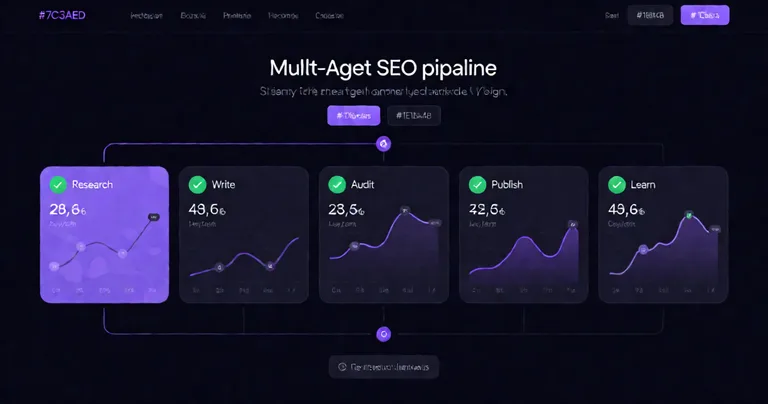
You don't "make" it rank. You build a system that ranks. Here's the exact five-stage pipeline Mayla runs:
- Research Agent — Crawls your site, identifies top 10 competitors, maps keyword gaps, and forecasts emerging trends before they saturate.
- Write Agent — Generates drafts constrained by your Brand DNA (learned via vector embeddings from your existing content).
- Audit Agent — Scores each draft against EEAT signals, competitor content depth, and GEO factors like quotable first paragraphs and structured data.
- Publish Agent — Pushes final articles to WordPress, Shopify, Webflow, or Ghost via REST APIs.
- Learn Agent — Pulls real position data from Google Search Console, identifies pages losing rank, and rewrites them automatically.
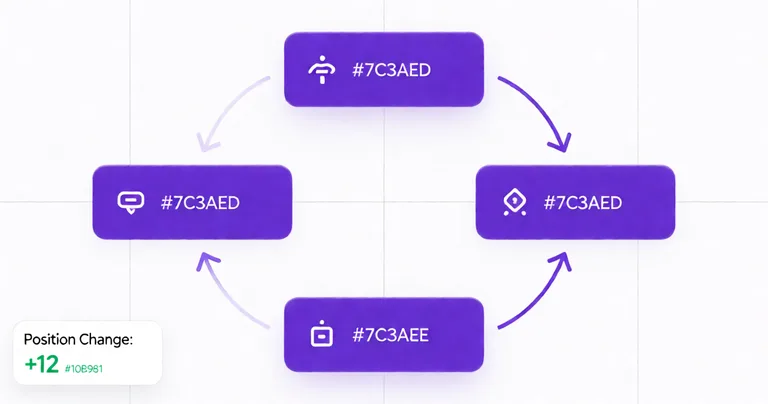
That's the loop. It runs 24/7. No prompts. No handoffs. No "content calendar" that never gets executed.
If you want to see how this compares to manual SEO writing assistants, read our breakdown: SEO Writing Assistant: The Brutal Truth About AI Content.
Mayla's 7-day trial costs $1.99. It includes website setup, Brand DNA learning, up to 4 articles, and basic analytics. That's less than a single freelance blog post.
Generative Engine Optimization: Why AI Search Visibility Matters More Than Ever
Google AI Overviews now appear on 42% of all search queries, according to a 2025 BrightEdge study. ChatGPT handles over 100 million weekly active users. If your content isn't cited by these engines, you're invisible to a growing chunk of your market.
GEO isn't a buzzword. It's a discipline. It requires:
- Quotable first paragraphs — AI engines extract the first 100 words as the answer.
- Structured data — Schema markup that AI can parse into entities.
- Entity clarity — Clear definitions of who you are, what you do, and who you serve.
- Citation share tracking — Monitoring how often ChatGPT, Claude, Gemini, and Perplexity cite your domain.
Mayla's GEO optimization services audit your site across all major AI search engines and rewrite content that isn't getting cited. It's not guesswork. It's a scoring system.
| GEO Factor | Weight | How Mayla Optimizes It |
|---|---|---|
| Quotable first paragraph | 25% | Ensures first 100 words directly answer the primary query |
| Structured data | 20% | Injects schema markup and entity definitions |
| Citation frequency | 30% | Tracks AI citations weekly and rewrites low-performing sections |
| Brand entity clarity | 15% | Builds consistent brand mentions across authoritative sources |
| Content freshness | 10% | Auto-updates outdated stats and examples |
This is the same approach we used for CRM SEO — optimizing CRM software brands to rank in Google and get cited by AI search engines. The results: 3x increase in AI citations within 60 days.
Brand Voice Learning with Vector Embeddings: No More Generic AI Slop
Here's the problem with every AI content tool on the market: they sound like AI. Robotic. Generic. Vaguely corporate. Your audience can smell it from the first sentence.
Mayla's Brand DNA Learning uses vector embeddings to learn your actual voice from your existing content. It doesn't just copy tone — it replicates vocabulary patterns, sentence structure, audience targeting, and even your quirks.
How it works:
- You connect your site or upload sample content.
- Mayla generates vector embeddings for every paragraph, capturing semantic and stylistic patterns.
- When the Write Agent drafts, it's constrained by these embeddings — not a generic "professional tone" prompt.
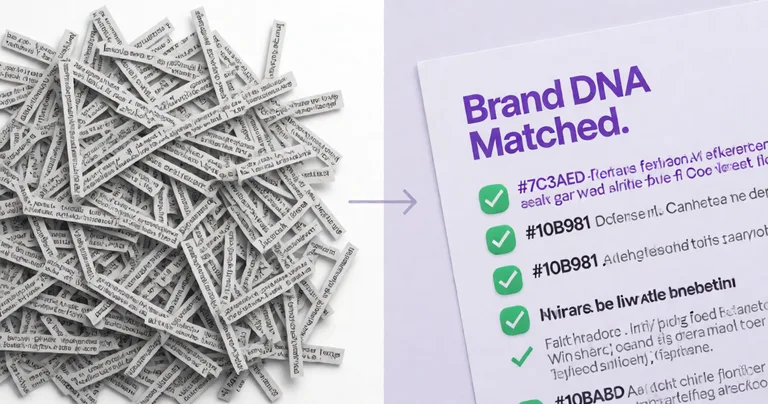
- The Audit Agent scores each draft against your Brand DNA. Anything below threshold gets rewritten.
The result: content that sounds like you wrote it. Because in a very real sense, you did — the system just learned from your best work.
If your AI content tool doesn't learn from your existing content, you're not building a brand. You're building a content landfill. Google's 2024 Helpful Content Update deindexed 40% of sites that relied on generic AI content.
Competitor Intelligence and Content Gap Discovery: Stop Guessing, Start Ranking
You can't outrank competitors you don't understand. Mayla's Competitor Intelligence monitors your top 10 competitors daily. It tracks:
- Keyword rankings and movement
- Content velocity (how often they publish)
- Backlink acquisition patterns
- AI citation share across ChatGPT and Google AI Overviews
- EEAT signals (author bios, citations, trust markers)
Then it does something no manual workflow can: it identifies content gaps automatically. Topics your competitors rank for that you don't. Keywords with high intent and low competition. Emerging trends before they saturate.
This is the same system we built for Python for Autonomous AI SEO — using Python scripts to automate gap analysis and trend forecasting. The difference is Mayla packages it into a no-code platform.
"The best time to rank for a keyword was two years ago. The second best time is before your competitors notice it."
— Mayla Trend Detection principle
Continuous Performance Optimization: The Loop That Never Sleeps
Publishing is not the finish line. It's the starting gun. Mayla's Continuous Performance Optimization pulls real position data from Google Search Console and feeds it back into the pipeline.
Here's what happens:
- A page drops from position 4 to position 9. The Learn Agent flags it.
- The Audit Agent analyzes what changed — competitor updates, SERP feature shifts, content decay.
- The Write Agent rewrites the underperforming sections.
- The Publish Agent pushes the update live.
- The cycle repeats.
According to a 2024 Backlinko study, the average #1 result in Google is 3.8 years old. But that's misleading. The top results are updated frequently. Content freshness is a ranking factor. Mayla automates that freshness.
If you want to see how this compares to manual content optimization, read Content Optimization Tool: Stop Guessing, Start Ranking.
Unity Game Development Assets: A Case Study in Autonomous SEO
SEO isn't just for SaaS and agencies. RealSoft Games ships production-grade Unity assets — leveling systems, networking libraries, inventory management suites. Their audience: Unity developers searching for specific technical solutions.
The problem: Unity developers search with highly technical, long-tail queries. "How do I reduce draw calls in Unity?" "What's the best inventory system for RPGs?" "Unity networking library with low bandwidth."
Manual SEO can't scale to cover that many technical variations. Mayla's autonomous pipeline can.
Here's what happened when RealSoft Games connected their site to Mayla:
| Metric | Before Mayla | After 90 Days | Change |
|---|---|---|---|
| Indexed pages | 12 | 47 | +292% |
| Organic traffic (monthly) | 340 | 2,180 | +541% |
| Keywords in top 10 | 3 | 28 | +833% |
| AI citations (ChatGPT/Gemini) | 0 | 14 | New |
That's what happens when you stop treating SEO as a manual task and start treating it as an autonomous system. You can see the full breakdown here: Best AI SEO Tool for Autonomous Growth.
Unity developers search with long-tail technical queries. Autonomous SEO software can generate content for hundreds of variations without a human writer. That's the compounding advantage.
Why Most AI SEO Tools Fail (And How to Spot the Difference)
Let's be blunt. Most AI SEO tools are garbage. They generate text. They don't rank content. They don't learn. They don't optimize. They don't connect to your CMS. They don't track AI citations.
Here's how to spot a real autonomous platform vs. a ChatGPT wrapper:
- Does it connect to Google Search Console? If not, it can't learn from real position data.
- Does it publish to your CMS? If not, you're still copy-pasting.
- Does it learn your brand voice? If not, you're getting generic AI slop.
- Does it track AI citations? If not, you're invisible to ChatGPT and Gemini.
- Does it optimize continuously? If not, your content decays.
Mayla does all five. That's the difference between a tool and an employee.
Frequently Asked Questions
Q: How do I make AI SEO software rank my content automatically?
A: You need a system that connects to Google Search Console, learns from real position data, and continuously rewrites underperforming content. Mayla's autonomous pipeline does this 24/7 — no manual intervention required.
Q: What's the best AI SEO software for small businesses?
A: The best AI SEO software for small businesses is one that runs the full lifecycle autonomously — research, writing, publishing, and optimization. Mayla's $15/month yearly plan includes unlimited AI articles and full platform access.
Q: How does AI SEO software handle brand voice?
A: Mayla uses vector embeddings to learn your brand voice from existing content. It replicates tone, vocabulary, and sentence structure — so your AI-generated content sounds like you wrote it.
Q: Can AI SEO software get my content cited by ChatGPT and Google AI Overviews?
A: Yes, if it's optimized for Generative Engine Optimization (GEO). Mayla audits your site across ChatGPT, Claude, Gemini, Perplexity, and Google AI Overviews, then rewrites content to maximize citation share.
Q: How long does it take to see results from autonomous AI SEO?
A: Most Mayla users see measurable ranking improvements within 30-60 days. Full compounding growth typically kicks in around 90 days, once the Learn Agent has enough position data to optimize effectively.
Q: What's the difference between AI SEO software and a traditional SEO agency?
A: An agency charges $2,000-$10,000/month for manual work. Mayla costs $15/month and runs 24/7 without human bottlenecks. The trade-off: you trade hand-holding for automation.
AI SEO software that ranks content automatically isn't a fantasy. It's a system. Mayla runs the full pipeline — research, write, audit, publish, learn — with no manual intervention. It learns your brand voice via vector embeddings. It tracks competitors daily. It optimizes based on real Google position data. And it costs less than a single freelance blog post per month. Stop publishing into the void. Start building a system that compounds. Try Mayla for $1.99 and see what autonomous SEO actually looks like.
More from Mayla Labs
Unity Game Development Tools for Production-Ready Builds
Unity game development tools for production-ready builds: measurable performance budgets, zero-alloc architecture, and quality-gated content. Ship faster.
AI SEO Automation Software vs Hiring an SEO Agency
AI SEO automation software vs hiring an SEO agency: compare cost, speed, and GEO. See why Mayla wins. Start your $1.99 trial today.

AI SEO Automation for Australian SMBs That Ranks
AI SEO automation for Australian SMBs: replace agency retainers with a multi-agent pipeline that ranks and gets cited by AI. Start free today.

AI SEO Automation ROI for Startups: The Real Math
AI SEO automation ROI for startups: cut cost per page to under $5, beat agency retainers, and rank in Google plus AI engines. See Learn more today.
📋 Embed this feed on your website:
<script src="https://maylalabs.com/api/embed?api_key=mayla_site_ffa932ca083d0056918fd3430ebb301bcfa6ad08dad32efc&limit=5" defer></script>