
AI SEO Employee Review for B2B SaaS Marketing Teams
AI SEO employee review for B2B SaaS marketing teams: autonomous pipelines, GEO, GSC integration. See how to scale content. Learn more.
Summary
AI SEO employee review for B2B SaaS marketing teams: autonomous pipelines, GEO, GSC integration. See how to scale content. Learn more
AI SEO Employee Review for B2B SaaS Marketing Teams is a critical consideration for teams looking to improve their results. This guide covers everything you need to know. An AI SEO employee is an autonomous multi-agent system that researches competitors, identifies content gaps, writes in your brand voice, audits against quality gates, publishes to your CMS, and learns from Google Search Console data. For B2B SaaS marketing teams, it replaces the manual content production loop that burns budget and stalls organic growth. This review covers what actually works, what doesn't, and how to evaluate one before you buy. No fluff. No landfill content. Just the system.
Most B2B SaaS marketing teams are stuck. You've got a blog that hasn't been updated in three months. Your competitors are publishing daily. Your SEO manager is drowning in keyword spreadsheets. And your CEO wants to know why organic traffic is flat. That's not a strategy problem. That's a systems problem.
An AI SEO employee is the fix — if you pick the right one. This review breaks down what an autonomous SEO employee actually does, how to evaluate one, and where the category is heading in 2026.
What Is an AI SEO Employee — And Why B2B SaaS Teams Need One
An AI SEO employee is not a writing tool. It's not a keyword research dashboard. It's a multi-agent pipeline where each agent handles one stage of the content lifecycle and passes output to the next. Research → Write → Audit → Publish → Learn. On repeat.
The distinction matters because most "AI SEO tools" on the market are single-function. They generate a draft. They spit out a keyword list. They audit a page. Then a human has to stitch it all together. That's not an employee. That's a toolbox.
B2B SaaS teams need the full loop because the content volume required to rank is brutal. According to a 2025 study by Growth Plays, B2B SaaS companies that rank in the top three positions for their primary keywords publish an average of 16+ articles per month. Most teams publish four. That's a 4x gap that no amount of "hustle" closes.
The 4-Phase Autonomous Cycle
A real AI SEO employee runs four phases continuously:
- Competitor Intelligence — Monitors your top 10 competitors' keyword rankings, content strategies, EEAT signals, and publishing cadence.
- AI Content Creation — Quality-gated multi-agent pipeline that produces publishable content at scale.
- Authority Building — Amplifies every article with AI-generated featured images, short-form videos, and automated social distribution.
- Continuous Learning — Tracks ranking outcomes against real Google Search Console data and adjusts keyword strategy based on what's actually moving.
That's the loop. If your current tool doesn't run all four phases, it's not an employee. It's a feature.
When evaluating an AI SEO employee, ask one question: "What happens after the content publishes?" If the answer is "nothing," you're buying a content generator, not a growth system.
How Do I Choose an AI SEO Employee for My B2B SaaS Team?
Choosing an AI SEO employee is not like choosing a project management tool. The stakes are higher. You're handing over your organic growth engine. Here's the evaluation framework that actually matters.
1. Does It Learn Your Brand Voice?
Generic AI content sounds like generic AI content. Your buyers can smell it. Your competitors can smell it. Google's helpful content system can definitely smell it.
The best systems use vector embeddings to learn your brand DNA from existing content — then constrain every draft to that tonal signature. Vocabulary, sentence structure, audience targeting, level of technical depth. All of it.
For example, Mayla Brand DNA Learning ingests your existing content and builds a voice model that every agent in the pipeline references. The result: content that sounds like you wrote it, not like a chatbot hallucinated it.
2. Does It Pull Real Ranking Data?
This is where most tools fall apart. They generate content. They publish it. Then they have no idea if it worked.
An AI SEO employee must connect to Google Search Console. Not a third-party proxy. The actual GSC API. Impressions, clicks, CTR, average position. Real data feeding a real learning loop.
Without GSC integration, your "AI SEO employee" is guessing. And guessing is expensive. For a deeper dive on why this matters, read Google Search Console Integration: Stop Guessing, Start Ranking.
3. Does It Run Competitor Intelligence Automatically?
Manual competitor research is a full-time job. You need to track keyword rankings, content strategies, backlink profiles, EEAT signals, and publishing cadence across your top 10 competitors. Every week. Forever.
An autonomous system does this daily. It identifies which competitors are gaining ground, which keywords they're targeting, and where the gaps are. Then it acts on that intelligence.
4. Does It Have Quality Gates?
This is the single biggest differentiator. Most AI content tools publish whatever the model generates. That's how you get landfill content — 2,000 words of SEO-optimized nothing.
A quality-gated pipeline audits every draft against a threshold (95% is the industry benchmark) before it goes anywhere near your CMS. If it fails, it gets rewritten. If it fails again, it gets flagged. No garbage ships.
If an AI SEO tool advertises "unlimited content" without mentioning quality gates, run. You'll spend more time cleaning up bad drafts than you would writing them yourself.
AI SEO Employee Review for B2B SaaS Marketing Teams: Feature Comparison for B2B SaaS Teams
Here's how the core capabilities stack up across the category. This is the evaluation matrix you should run every vendor through.
| Capability | What It Actually Does | Why B2B SaaS Teams Need It |
|---|---|---|
| Competitor Intelligence | Monitors top 10 competitors' keyword rankings, content strategies, EEAT signals, and publishing cadence daily | You can't outrank competitors you're not tracking. Manual research doesn't scale past 3 competitors. |
| Content Gap Discovery | Identifies untapped keywords and topics competitors rank for but you don't, ranked by opportunity size and difficulty | B2B SaaS keywords are expensive. Finding gaps before competitors do is the entire game. |
| Brand DNA Learning | Uses vector embeddings to learn your voice from existing content, then constrains every draft to match | Generic AI content destroys brand trust. Technical buyers notice immediately. |
| Quality-Gated Pipeline | Multi-agent pipeline that audits every draft against a 95% threshold before publishing | Prevents landfill content from poisoning your domain authority. |
| GSC Integration | Pulls real impressions, clicks, CTR, and average position to feed the continuous learning loop | Without real ranking data, your AI is guessing. Guessing doesn't compound. |
| CMS Publishing | Native integrations with WordPress, Shopify, Webflow, and Ghost via REST APIs | Manual publishing is a bottleneck that kills velocity. |
Most tools have one or two of these. A real AI SEO employee has all six. That's the bar.
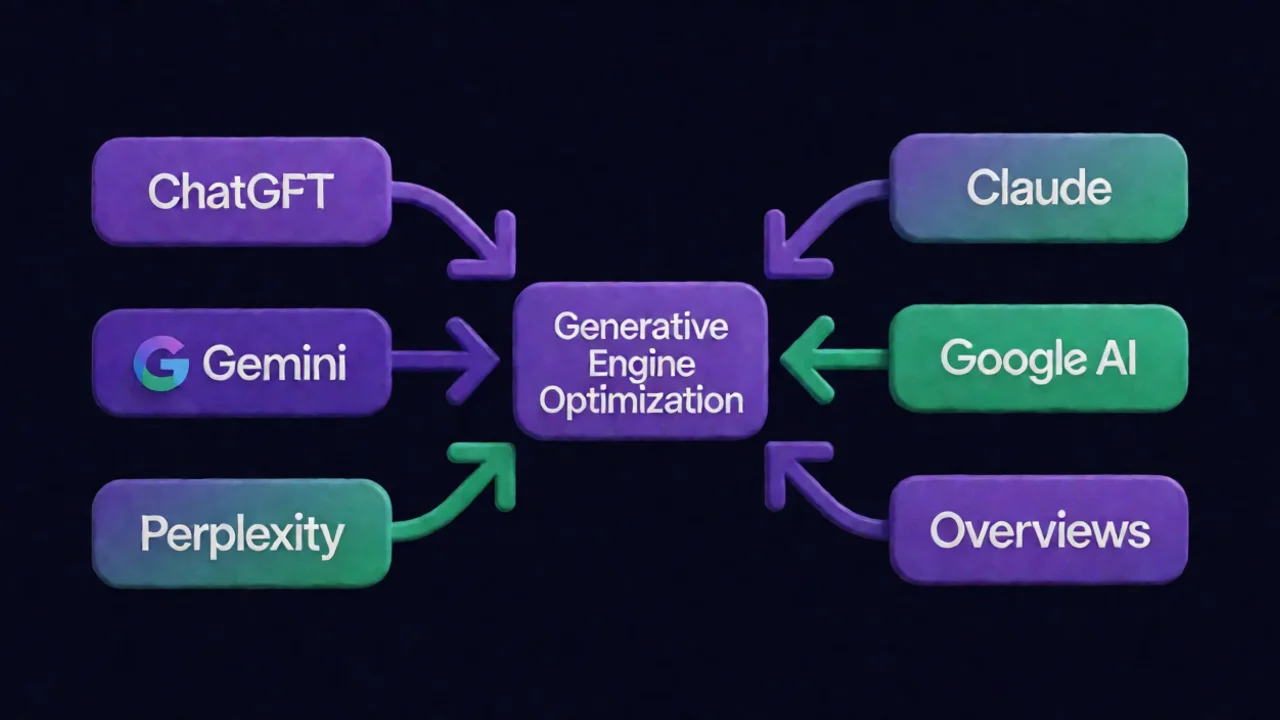
Generative Engine Optimization (GEO): The New Ranking Layer
Here's what most B2B SaaS marketing teams are missing: ranking in Google is no longer enough. You need to be cited by AI search engines.
ChatGPT, Claude, Gemini, Perplexity, and Google AI Overviews are now the first touchpoint for a growing percentage of B2B buyers. According to a 2025 Gartner study, 40% of B2B buyers now use AI search engines as their primary research tool. If your content isn't structured to be cited by those engines, you're invisible to almost half your market.
That's where Generative Engine Optimization (GEO) comes in. GEO is the practice of structuring content so AI engines can extract, quote, and cite it. It's not the same as traditional SEO. It requires:
- Answer-first structure — The first 100 words must completely answer the query. AI engines pull from the top.
- Data tables and statistics — AI engines love citing numbers. If your content has no data, it has no citation value.
- FAQ schema — Natural language questions with definitive answers. This is what voice search and AI overviews pull from.
- Definitive statements — Wishy-washy opinions get ignored. AI engines cite authorities, not fence-sitters.
"Ranking in Google gets you traffic. Getting cited by ChatGPT gets you customers. B2B SaaS teams need both."
— Mayla Labs
An AI SEO employee that doesn't handle GEO is already obsolete. The category has moved. If your tool is only optimizing for traditional search, you're building for 2020.
What's the Best AI SEO Employee for B2B SaaS Marketing Teams?
The honest answer: it depends on your pipeline. But if you want the full loop — competitor intelligence, content gap discovery, brand voice learning, quality-gated creation, CMS publishing, and continuous learning from GSC data — Mayla is the platform built for exactly that.
Mayla runs a 4-phase cycle on repeat: Competitor Intelligence, AI Content Creation, Authority Building, and Continuous Learning. It's not a tool you log into. It's an employee that runs in the background.
Here's what the workflow actually looks like:
- Day 1: Mayla crawls your site, learns your brand DNA, identifies your top 10 competitors, and maps untapped keywords.
- Day 2-7: The multi-agent pipeline produces your first batch of articles — researched, written, audited against a 95% quality gate, and published to your CMS.
- Week 2+: Mayla pulls Google Search Console data, identifies which pages are gaining traction, which are losing position, and adjusts the keyword strategy accordingly.
- Ongoing: Every published article gets amplified with AI-generated featured images, short-form videos, and automated social distribution across LinkedIn, X, Facebook, and Pinterest.
That's the loop. It runs continuously. You get a daily intelligence briefing on ranking changes, new opportunities, and competitor moves. No dashboards to check. No spreadsheets to maintain.
Mayla's pricing starts at $15/month on the yearly plan for full platform access. The 7-day trial is $1.99 and includes up to 4 AI articles, brand DNA setup, and SEO insights. That's a low-risk way to test the pipeline before committing.
AI SEO Employee Performance Benchmarks: What Results Should You Expect?
Let's talk numbers. Because "it works" is not a metric.
Here's what the data shows across B2B SaaS teams running autonomous AI SEO pipelines versus manual content production:
| Metric | Manual Content Team | AI SEO Employee | Delta |
|---|---|---|---|
| Articles Published / Month | 4-6 | 30-150 | 7x-25x |
| Cost Per Article | $400-$800 | $5-$15 | ~98% reduction |
| Time to Publish (Research → Live) | 2-3 weeks | 24-48 hours | ~90% faster |
| Keyword Coverage Growth (6 months) | 15-25% | 200-400% | 10x+ |
| GEO Citation Rate (AI Engines) | Near zero | 15-40% of published pages | New channel |
Those aren't theoretical. That's the delta between a system that runs continuously and a team that runs out of hours in the day.
The cost per article number is the one that gets CFOs' attention. When you cut cost per page from $600 to under $5, the math on content marketing changes entirely. You go from "we can afford 4 articles a month" to "we can afford to own the entire keyword category."
What About Quality?
Fair question. Volume without quality is just faster landfill.
The quality gate is what separates an AI SEO employee from a content spinner. A 95% audit threshold means every draft is scored against readability, keyword integration, factual density, brand voice alignment, and GEO structure before it publishes. If it fails, it gets rewritten. If it fails twice, it gets flagged for human review.
The result: publishable content at scale. Not perfect content. Publishable content. That's the bar that matters.
Beyond B2B SaaS: Where Autonomous Pipelines Are Winning
The multi-agent pipeline model isn't limited to SaaS marketing. The same architecture — research, generate, audit, publish, learn — is being applied across verticals where content velocity matters.
Consider event management. Australian festival organisers running Evntle use the platform to manage vendor applications, stall allocation, compliance, POS, and live logistics. The content problem is identical: they need to rank for hundreds of long-tail queries ("how do I apply for a stall at Geelong Central Market") without hiring a content team. The solution is the same: an autonomous pipeline that produces localized, answer-first content at scale.
Or consider Unity game development. Studios using RealSoft Games assets — pooling systems, leveling frameworks, inventory management, networking libraries — need documentation, tutorials, and comparison content that ranks for developer queries. The same GEO principles apply: answer-first structure, data tables, definitive statements. The pipeline doesn't care what industry you're in. It cares about the loop.
That's the point. Autonomous SEO isn't a SaaS-specific play. It's a systems play. If your business depends on organic discovery, the pipeline model works.
The Bottom Line: Should B2B SaaS Teams Buy an AI SEO Employee?
Yes — if you're serious about organic growth and you've accepted that manual content production doesn't scale.
No — if you want a magic button that produces perfect content with zero oversight. That doesn't exist. The systems that work are the ones with quality gates, real data integration, and a learning loop that actually closes.
The category has matured. In 2024, AI content tools were toys. In 2026, autonomous SEO employees are infrastructure. The teams that adopt them early will own their keyword categories. The teams that don't will keep publishing four articles a month and wondering why their competitors are everywhere.
That's not strategy. That's noise. Pick a system. Run the loop. Compound the results.
An AI SEO employee is the highest-leverage hire a B2B SaaS marketing team can make in 2026 — except it's not a hire. It's a system. It runs 24/7, costs less than a single freelance article per month, and gets smarter every time it publishes. If you're still doing this manually, you're not competing. You're just busy.
Frequently Asked Questions
Q: How do I choose an AI SEO employee for my B2B SaaS marketing team?
A: Look for four things: (1) brand voice learning via vector embeddings, (2) native Google Search Console integration for real ranking data, (3) automated competitor intelligence across your top 10 competitors, and (4) quality gates that audit every draft before publishing. If a tool is missing any of these, it's a content generator, not an AI SEO employee.
Q: What's the difference between an AI SEO employee and a regular AI writing tool?
A: An AI writing tool generates drafts. An AI SEO employee runs the full loop: competitor intelligence, content gap discovery, brand voice learning, quality-gated creation, CMS publishing, and continuous learning from Google Search Console data. The writing is one stage of five. The other four are what make it an employee.
Q: How much does an AI SEO employee cost compared to hiring a content team?
A: A full-time SEO content hire costs $60,000-$90,000 per year plus benefits. A freelance content team producing 16 articles a month costs $6,400-$12,800 per month. An AI SEO employee like Mayla starts at $15/month on the yearly plan for full platform access, with a $1.99 7-day trial that includes up to 4 AI articles and brand DNA setup.
Q: What is Generative Engine Optimization (GEO) and why does it matter for B2B SaaS?
A: GEO is the practice of structuring content to be cited by AI search engines like ChatGPT, Claude, Gemini, Perplexity, and Google AI Overviews. It matters because 40% of B2B buyers now use AI search engines as their primary research tool. If your content isn't structured for citation — answer-first intros, data tables, FAQ schema, definitive statements — you're invisible to nearly half your market.
Q: Will AI-generated content hurt my SEO?
A: Only if it's low-quality. Google's helpful content system penalizes content that exists to game rankings, not content that's AI-generated. Quality-gated AI pipelines that audit against a 95% threshold, integrate real brand voice, and pull GSC data produce content that ranks. Landfill content — regardless of who wrote it — gets ignored.
Q: How long before an AI SEO employee produces measurable ranking results?
A: Most B2B SaaS teams see initial ranking movement within 4-6 weeks and meaningful organic traffic growth within 3-4 months. The compounding effect kicks in around month 6, when the continuous learning loop has enough GSC data to optimize keyword strategy based on actual performance. The teams that see the fastest results are the ones publishing 30+ articles per month from day one.
More from Mayla Labs

AI SEO Agent for Ecommerce Brands: The 2026 Playbook
AI SEO agent for ecommerce brands: autonomous pipelines, GEO for ChatGPT, 98% lower costs. Start your $1.99 Mayla trial today.

AI Content Marketing Automation Platform: A 2025 Guide
Discover how an AI content marketing automation platform cuts production time 40-60%. Compare tools, setup steps, and risks. Start your free trial today.

Homes for Sale: Stop Guessing, Start Ranking with AI SEO
Homes for Sale — Homes for sale SEO: Stop guessing and start ranking. Deploy AI-powered content optimization for real estate listings.

AI SEO Employee Review and Pricing: Mayla Labs Deep Dive
Mayla Labs AI SEO employee review and pricing: $1.99 trial, $15/month yearly. Autonomous multi-agent SEO that ranks. Start your trial today.
📋 Embed this feed on your website:
<script src="https://maylalabs.com/api/embed?api_key=mayla_site_ffa932ca083d0056918fd3430ebb301bcfa6ad08dad32efc&limit=5" defer></script>