
AI SEO Employee Pricing vs Hiring In-House SEO
AI SEO employee pricing vs hiring in-house SEO: $15/mo vs $120k/yr. Compare costs and ROI. Start your $1.99 trial today.
Summary
AI SEO employee pricing vs hiring in-house SEO: $15/mo vs $120k/yr. Compare costs and ROI. Start your $1.99 trial today.
AI SEO Employee Pricing vs Hiring In-House SEO
AI SEO employee pricing starts at $15/month billed annually, while hiring an in-house SEO specialist costs $75,000–$120,000 per year in salary alone. For most SMBs and growth-stage companies, that's not a close call. An autonomous AI SEO employee delivers 150+ ranking pages per month at under $5 per page, runs 24/7, and never takes a holiday. An in-house hire gives you one person, 40 hours a week, and a salary that compounds against you. This article breaks down the real economics — cost per ranking page, output volume, time-to-rank, and ROI — so you can decide which model actually wins.
What Does an AI SEO Employee Actually Cost vs an In-House Hire?
Let's kill the vague comparisons. Here's the real math on AI SEO employee pricing versus hiring in-house SEO talent in 2025.
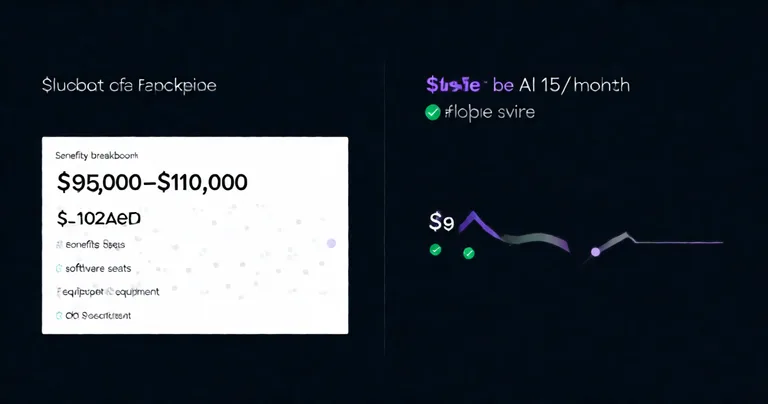
An in-house SEO specialist in the US costs $75,000–$95,000 base salary. Add benefits, payroll tax, equipment, software seats, and training and you're at $95,000–$120,000 fully loaded. That's before you've published a single article. In Australia, an equivalent mid-level SEO manager runs AUD $85,000–$110,000 plus superannuation and overhead.
Now compare that to Mayla's pricing. $15/month billed annually. $29/month month-to-month. The Mayla AI SEO Employee doesn't need onboarding, doesn't need a laptop, and doesn't need you to explain what a canonical tag is.
| Cost Component | In-House SEO Hire | Mayla AI SEO Employee | Traditional Agency |
|---|---|---|---|
| Annual cost | $95,000–$120,000 | $180 (yearly plan) | $36,000–$120,000 |
| Cost per published article | $250–$500 (loaded) | Under $5 | $150–$500 |
| Monthly output | 8–15 articles | 150+ articles | 4–10 articles |
| Hours per week | 40 | 168 (24/7) | Managed retainer |
| Ramp-up time | 60–90 days | Same day | 30–60 days |
Run the cost-per-ranking-page calculation before you sign anything. If your current cost per page is over $50, you're paying agency prices for in-house output. That's the worst of both worlds.
The Hidden Costs Nobody Puts in the Job Ad
Salary is the easy number. The expensive number is everything around it.
- Recruitment: $5,000–$15,000 in agency fees or 20+ hours of your own screening time.
- Tooling: Ahrefs, Semrush, Surfer, Screaming Frog — $300–$600/month in seats.
- Management overhead: 4–6 hours per week of your time reviewing their work.
- Turnover risk: Average SEO tenure is 18–24 months. Every replacement resets your strategy.
- Coverage gaps: One person can't do technical SEO, content, GEO, and social distribution at full quality.
An AI SEO employee has none of these. There's no recruitment, no tooling stack to manage, no turnover, no coverage gap. That's not a small difference. That's the difference between a system that compounds and a headcount that leaks.
Why AI SEO Employee Pricing Beats Hiring In-House SEO on Output
Cost is only half the story. The other half is what you actually get for the money.
A single in-house SEO can realistically research, write, audit, and publish 8–15 quality articles per month. That's the ceiling. Beyond that, quality collapses or the person burns out.
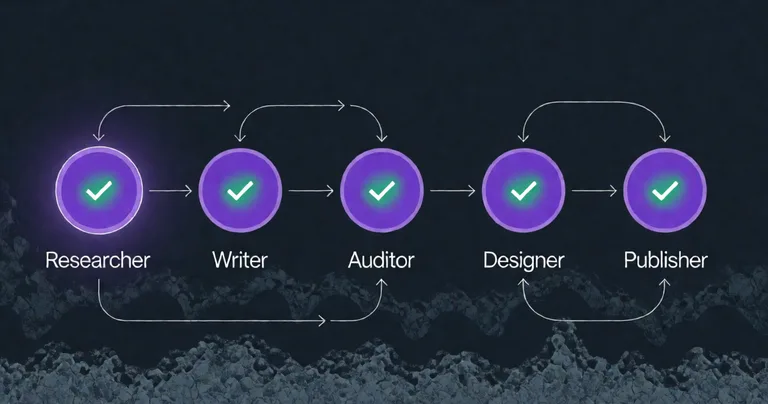
Mayla's Mayla AI Content Creation Pipeline runs a five-agent workflow — Researcher, Writer, Auditor, Designer, Publisher — with a 95%+ SEO score quality gate before anything publishes. That pipeline produces 150+ articles per month on the yearly plan. Same fixed cost. 10x the output.
"You're not choosing between one writer and one AI. You're choosing between one writer and a content factory that never sleeps, never forgets your brand voice, and never asks for a raise."
— Mayla Labs Engineering
Brand Voice Learning: The Objection That Kills In-House Hires
The standard pushback is "AI content doesn't sound like us." Fair. For generic AI tools, that's true. For a system with vector embedding-based brand voice learning, it's not.
Mayla's Mayla Brand DNA Learning encodes your tone, vocabulary, sentence rhythm, and audience targeting into vector embeddings. Every article it generates is measured against that fingerprint before publishing. The output doesn't just pass an SEO score — it passes a voice match. That's the part most people don't believe until they read the first batch.
Brand voice drift is the real killer of in-house content at scale. When one person writes 15 articles a month for 12 months, quality slips. A vector-encoded brand DNA doesn't drift — it locks in.
How Do You Measure ROI on AI SEO Employee Pricing?
ROI isn't a vibe. It's a formula.
ROI = (Value of organic traffic + Value of AI citations − Total cost) ÷ Total cost
Here's how that breaks down across a 12-month window for a typical SMB publishing 150 articles per month on the yearly plan.
| Metric | In-House Hire (Year 1) | Mayla Yearly Plan (Year 1) |
|---|---|---|
| Total cost | $110,000 | $180 |
| Articles published | 120–180 | 1,800+ |
| Cost per article | $610–$915 | Under $0.10 |
| Cost per ranking page (est.) | $150–$400 | Under $5 |
| GEO coverage (ChatGPT, Perplexity, AI Overviews) | Manual, inconsistent | Built into every article |
| Continuous optimization | Quarterly, if time permits | Daily via GSC loop |
The cost-per-ranking-page number is the one that matters. At $150–$400 per ranking page via in-house or agency, you need a very specific revenue model to justify the spend. At under $5 per page, the math becomes trivial. You're not asking whether it pays back. You're asking how fast.
The Google Search Console Feedback Loop
Here's where autonomous systems leave humans in the dust. An in-house SEO checks Google Search Console when they remember to. Maybe weekly. Maybe monthly. An autonomous system pulls GSC data daily — impressions, clicks, CTR, average position — and feeds it straight back into the strategy engine.
That's what Mayla's Google Search Console Integration does. Pages losing position get flagged. Underperforming content gets rewritten. Keyword strategy adjusts based on real ranking data, not guesses. The loop runs whether anyone's watching or not.
What About GEO and AI Search Citation?
Traditional SEO gets you into Google. Generative Engine Optimization (GEO) gets you quoted by ChatGPT, Claude, Gemini, Perplexity, and Google AI Overviews. These are different games, and most in-house hires don't know how to play the second one yet.
GEO requires specific structural elements: definitive statements, data tables, FAQ blocks, clean heading hierarchies, and quotable first paragraphs. That's not a content style preference — it's how LLMs extract and cite sources.
Mayla's pipeline builds GEO into every article by default. Data tables, FAQ blocks, definitive answers, clean H2/H3 structure. The output is engineered for extraction, not just ranking. That's the difference between content that ranks and content that gets cited.
If your current SEO strategy doesn't include GEO, you're already behind. AI Overviews now appear on a large share of commercial queries. Content that isn't structured for extraction doesn't get extracted. It just sits there.
Competitor Intelligence and Content Gap Discovery
An in-house SEO monitors maybe 3 competitors, occasionally. An autonomous system monitors 10, daily, and surfaces the gaps automatically.
Mayla's Mayla Competitor Intelligence tracks keyword rankings, content strategies, and EEAT signals across your top competitors. It feeds into Mayla Content Gap Discovery, which surfaces keywords competitors rank for that you don't — prioritized by search volume, competition, and commercial intent. Then it writes the articles that close the gap. All before your in-house hire has finished their Monday standup.
When Does Hiring In-House Actually Make Sense?
We're not going to pretend in-house hires are never the right call. They are — in specific situations.
- You need someone to own relationships. PR, partnerships, and link building still require a human in the room.
- You have complex technical SEO at scale. Site architecture across 50,000+ URLs needs engineering judgment, not just content generation.
- You're building an in-house content team for brand reasons. Thought leadership, executive ghostwriting, and community content often need a human touch.
- Your market is hyper-niche and requires domain expertise. Medical, legal, and financial content still benefits from credentialed humans in the loop.
But here's the honest version: for most SMBs and growth-stage companies, the in-house hire is doing 80% work that a system could do better, cheaper, and faster — and 20% work that actually needs a human. You're paying $110k for the 20%.
The smart play is a hybrid. Let the autonomous system handle research, writing, auditing, publishing, GEO, and continuous optimization. Use your human for strategy, relationships, and the high-judgment work. That's not a compromise. That's the optimal configuration.
"The question isn't whether AI can replace an SEO hire. It's whether you should keep paying $110k a year for work a $15/month system does better."
— Mayla Labs Engineering
How Do I Get Started With an AI SEO Employee?
Start with the trial. It costs $1.99 for 7 days and includes up to 4 AI-generated articles, full brand DNA setup, website analysis, and a GEO audit. That's enough to see whether the output matches your voice and passes your quality bar.
- Run the trial. $1.99, 7 days, 4 articles. No commitment.
- Review the output. Check the SEO scores, the voice match, the GEO structure.
- Compare cost per page. Stack it against your current in-house or agency cost.
- Scale up if it works. Yearly plan is $15/month billed annually with unlimited articles.
- Keep your human for strategy. Let the system handle the volume.
The $1.99 trial is designed to answer one question: does this sound like us? If the answer is yes, the pricing comparison is already over. If the answer is no, you've spent $1.99 to find out. That's a better deal than a $15,000 recruitment fee.
The economics are not close. AI SEO employee pricing at $15/month versus $110,000/year for an in-house hire is a 6,000x cost difference for 10x the output. That's not a marketing claim — that's the math. The only question worth asking is whether the output quality matches your bar. Run the trial, read the articles, check the scores. Then decide. Mayla's autonomous SEO platform exists because the old model is broken, and the operators who figure that out first are the ones who win.
Frequently Asked Questions
Q: How much does an AI SEO employee cost compared to hiring in-house?
A: Mayla's AI SEO employee starts at $15/month billed annually. An in-house SEO specialist costs $95,000–$120,000 per year fully loaded. That's roughly a 6,000x cost difference for 10x the content output.
Q: Can AI SEO content actually rank on Google?
A: Yes, if it's built correctly. Mayla's pipeline enforces a 95%+ SEO score quality gate before publishing, uses vector embedding-based brand voice learning, and structures every article for both Google ranking and AI search citation. Generic AI content fails. Engineered AI content ranks.
Q: What's the best way to compare cost per ranking page?
A: Divide total SEO spend by the number of pages ranking in the top 10. In-house and agency models typically land at $150–$400 per ranking page. Mayla lands under $5. If your current cost per ranking page is above $50, you're overpaying.
Q: Does an AI SEO employee replace my entire SEO team?
A: It replaces the volume work — research, writing, auditing, publishing, GEO structuring, and continuous optimization. It doesn't replace strategy, PR, partnerships, or high-judgment technical decisions. The optimal setup is a hybrid: AI for volume, humans for judgment.
Q: How does brand voice learning work?
A: Mayla extracts tone, vocabulary, sentence rhythm, and audience targeting from your existing content using vector embeddings. Every generated article is measured against that fingerprint before publishing. The output doesn't just pass SEO checks — it passes a voice match.
Q: Why should I care about GEO if I already rank on Google?
A: Because AI Overviews, ChatGPT, Perplexity, and Claude now answer a growing share of commercial queries. If your content isn't structured for AI extraction — definitive statements, data tables, FAQ blocks, clean heading hierarchies — it won't get cited. Ranking alone isn't enough anymore.
More from Mayla Labs

AI SEO Automation vs Hiring an SEO Agency: The 2026 Verdict
AI SEO automation vs hiring an SEO agency: compare cost, output, and GEO visibility. See why autonomous pipelines win. Start your $1.99 trial today.

AI SEO Automation Platform That Actually Ranks Content
AI SEO automation platform that actually ranks content. Autonomous multi-agent pipeline, GEO optimization, under $5 per page. Start your $1.99 trial today.

AI SEO Employee for Small Business: Autonomous Growth
AI SEO employee for small business: autonomous multi-agent pipeline that researches, writes, audits, and publishes. Start your $1.99 trial today.

AI SEO Automation Software With Quality Gates
AI SEO automation software with quality gates: 5-agent pipeline, 95% audit threshold, GEO optimization.
📋 Embed this feed on your website:
<script src="https://maylalabs.com/api/embed?api_key=mayla_site_ffa932ca083d0056918fd3430ebb301bcfa6ad08dad32efc&limit=5" defer></script>